Saltwater is only one reason ordinary cable fails at sea. Continuous humidity, vibration, oil, ultraviolet exposure, fire risk, tight routing, electromagnetic noise, and mechanical loads can attack different parts of the same electrical system. A Marine Cable is therefore not defined by a single jacket color or the word “waterproof.” It becomes marine grade when its complete construction, test evidence, and installation suitability match a documented marine service. The sections below explain the decisive design features, the standards behind them, and the questions buyers should ask before approving cable for vessels, offshore energy, automation, or submerged links.
Marine Grade Means Proven Fitness for a Defined Service
“Marine grade” is a performance description rather than one universal cable design. A small-craft battery circuit, an offshore control cabinet, a platform power feeder, and a submarine export route experience very different electrical and mechanical demands. Cable intended for one location may be unsuitable for another even when both products resist moisture. The correct specification begins with voltage, current, circuit function, installation method, ambient conditions, expected movement, fire strategy, and the rules of the applicable authority or classification society.
This distinction is reflected in the standards themselves. UL 1426 identifies boat cable as a specific product category, while IEC 60092-350 covers construction and testing for power, control, and instrumentation cables in fixed shipboard and offshore systems. IEEE 1580 addresses cables rated from 300 V to 35 kV for marine vessels and fixed or floating facilities. These scopes demonstrate why a buyer should never approve a Marine Cable from a broad marketing description alone.
The service boundary also matters. A cable installed inside a protected machinery room is not exposed to the same forces as one pulled across a seabed. Subsea systems must account for water penetration, installation tension, external pressure, seabed interaction, and long-term mechanical protection. DNV treats subsea power cable certification as a dedicated discipline under DNV-ST-0359, while IEC has a separate standard for fixed shipboard and offshore optical fibre cables. Marine grade therefore means verified fitness for the stated location, not automatic suitability everywhere near water.
Construction Features That Determine Marine Cable Reliability
The conductor must carry the required load while tolerating the expected installation and movement. Stranded copper is widely specified in vessel wiring because stranded construction handles routing and vibration better than a solid conductor. Tinned strands are common in some boat and bonding applications because the coating provides additional protection where moisture reaches exposed metal, but tinning alone does not make a cable marine grade. Offshore and subsea power designs may use copper or aluminum conductors when the applicable design, voltage rating, connections, and project requirements permit them.
Insulation provides electrical separation, while the outer sheath faces the environment. These layers must be selected for the actual combination of heat, seawater, oils, fuels, chemicals, sunlight, abrasion, and fire requirements. An Oil Resistant Cable may be appropriate around machinery, hydraulic systems, or processing equipment, but oil resistance does not automatically prove suitability for continuous immersion. Similarly, a Corrosion Resistant Cable must still have the correct electrical rating, fire behavior, and mechanical design. IEC 60092-360 specifically addresses the electrical, mechanical, and special characteristics of insulation and sheathing materials for shipboard and offshore cables.
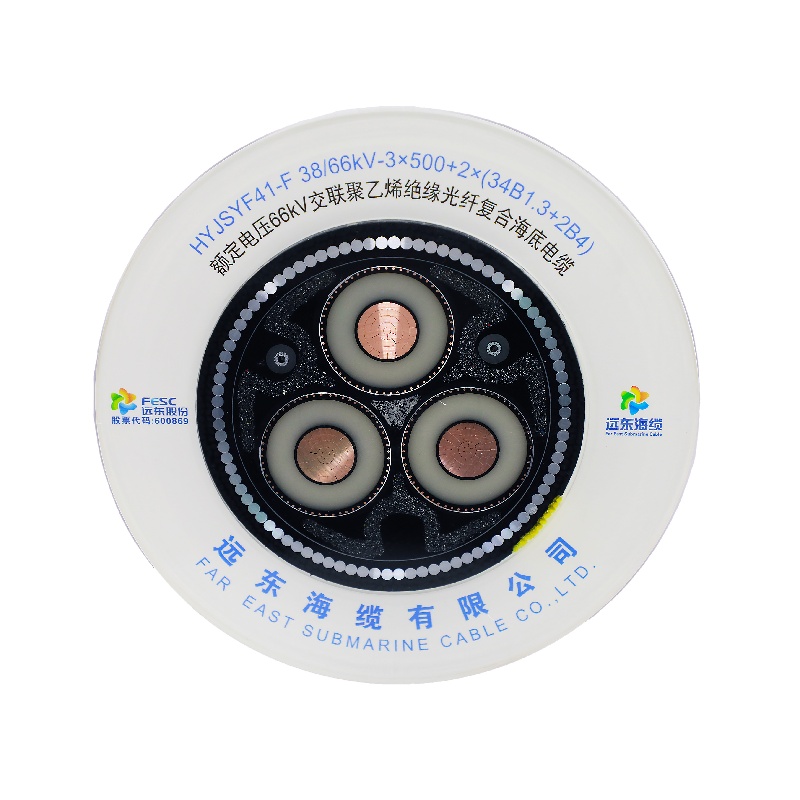
Water resistance must also be defined precisely. Occasional spray, humid air, temporary flooding, and permanent subsea installation are not equivalent test conditions. A Waterproof Cable can use moisture-resistant insulation and sealing structures for wet environments, whereas submarine power designs may add longitudinal water-blocking tapes, radial barriers, metallic sheaths, and armored outer protection. Buyers should ask whether the stated protection applies to the finished cable, individual cores, damaged-sheath conditions, or only an intact outer jacket.
Armor and screening solve different problems. Steel wire or tape armor protects against pulling forces, impact, pressure, and seabed friction, but it increases diameter, weight, stiffness, and termination complexity. Electrical screens and metallic shields control electric fields or reduce electromagnetic interference; they are particularly relevant near variable-frequency drives, motors, sensors, communication networks, and automation equipment. A strong Marine Cable design combines only the layers required by its service rather than adding armor or shielding without considering bend radius, grounding, heat dissipation, and installation space.
Match the Cable to Its Actual Exposure Zone
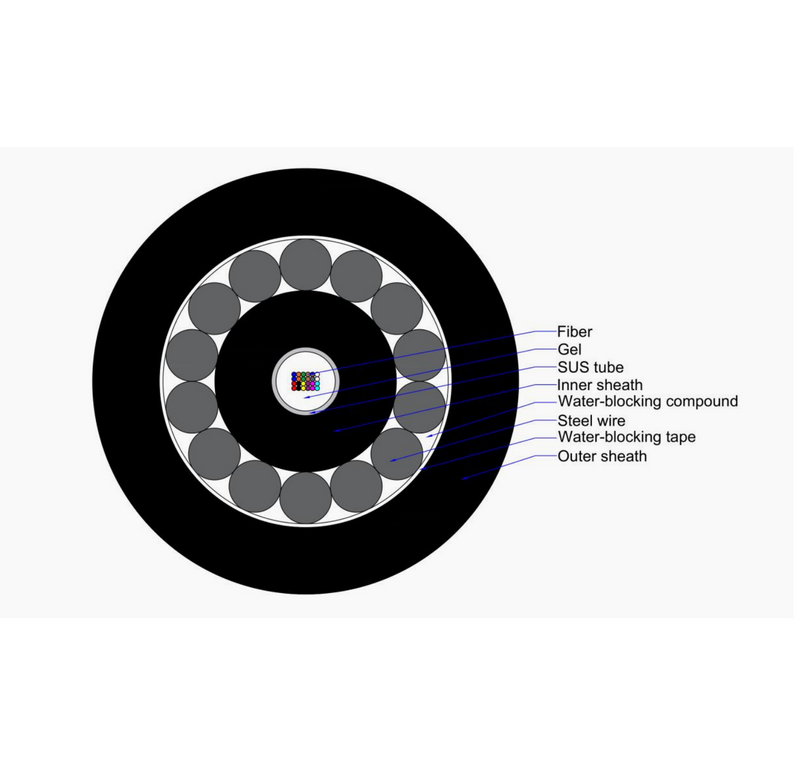
Marine automation generally relies on control, instrumentation, data, and communication circuits rather than one generic cable type. Signal integrity may require twisted pairs, individual or collective screening, controlled electrical characteristics, and separation from power cables. IEC 60092-376 applies to screened and unscreened control and instrumentation cables for fixed ship and offshore installations, while IEC 60092-378 covers fixed optical fibre cables. An Offshore Fiber Optic Cable can additionally use water-blocking compounds, steel wire protection, and a corrosion-resistant outer sheath when communication must cross an underwater route.
Service Zone
Dominant Threats
Main Specification Priorities
Onboard automation
Vibration, electromagnetic noise, oil, and heat
Screening, pair design, flexible routing, and sheath compatibility
Offshore topside equipment
Salt spray, UV, hydrocarbons, fire, and impact
Oil-resistant sheath, flame performance, armor, and approvals
Subsea power route
Water pressure, pulling load, and seabed contact
Water blocking, voltage design, armor, and installation limits
Underwater communication
Moisture, tension, pressure, and signal loss
Protected optical unit, armor, bend limits, and attenuation limits
Offshore energy and oil and gas platforms add further distinctions. Low-voltage power cables for fixed shipboard and offshore installations fall within IEC 60092-353, while medium-voltage designs up to 18/30 kV are addressed by IEC 60092-354. Hazardous locations may impose additional construction, flame, installation, and certification requirements, so resistance to oil is only one part of the assessment. United States vessel regulations, for example, identify IEEE 1580, UL 1309, and relevant IEC 60092 standards among recognized cable provisions for certain hazardous-location installations.
Submarine transmission belongs to another design level. The High Voltage Submarine Cable range presented by Yongchuang includes copper or aluminum conductors, XLPE insulation, water-blocking layers, and steel wire or steel tape armor. Its stated applications include offshore wind connections, island transmission, coastal grid links, and offshore platform power. These features illustrate how a subsea Marine Cable must combine electrical insulation with installation strength and long-term protection from water and seabed forces.
Standards and Documents That Prove Suitability
The jacket marking should identify more than the manufacturer and voltage. Depending on the application, buyers may need the standard designation, conductor size, number of cores, temperature rating, voltage class, fire-performance marking, sheath type, and production traceability. For North American recreational boats, project documents may reference ABYC E-11 and UL 1426. Larger vessels and offshore facilities commonly use the IEC 60092 series, IEEE 1580, UL 1309, flag-state rules, or classification requirements selected by the project authority.
A useful cable submittal should connect every important claim to evidence. The review package may include a technical datasheet, construction drawing, applicable standard, type-test report, routine-test requirements, material information, drum length, bend limits, pulling limits, and relevant approval certificate. Where classification is required, confirm that the approval covers the exact cable family and intended service rather than an unrelated product from the same factory. DNV distinguishes design assessment, type approval, inspection, verification, and testing as separate certification services, which shows why a logo or general certificate should not replace document review.
Standards should also match the cable function. IEC 60092-350 provides general construction and test methods, but separate parts cover power, control, instrumentation, optical fibre, materials, and installation. A certificate to one test does not establish compliance with every required property. Buyers should create a compliance matrix that lists each project requirement, the applicable clause or test, the submitted evidence, and any deviation requiring engineering approval. This method makes the meaning of “marine grade” auditable instead of subjective.
Installation Can Preserve or Defeat the Design
Even a correctly certified Marine Cable can fail early when installation exceeds its mechanical limits or allows water to reach the termination. Routing should respect the manufacturer’s minimum bend radius, maximum pulling tension, permitted support spacing, and installation temperature. Cables should be protected from sharp edges, standing water, hot surfaces, moving machinery, and locations where maintenance work may crush or cut them. IEC 60092-352 addresses cable selection, installation, and operating conditions, while vessel regulations also emphasize weather protection, avoidance of sharp bends, and support against chafing.
Terminations deserve the same attention as the cable body. Glands must match the cable diameter, sheath material, armor arrangement, enclosure rating, and hazardous-area requirement where applicable. Shield and armor bonding should follow the system design; an improvised connection can create electromagnetic problems, circulating currents, or ineffective fault protection. Metallic armor may also require electrical continuity and grounding under applicable vessel rules, while connections may need protective enclosures. A dependable marine installation therefore treats cables, glands, connectors, supports, fire stops, and inspection access as one coordinated system.
Inspection should continue after commissioning. Look for loose glands, damaged jackets, corrosion products, overheating, oil-softened sheaths, crushed supports, excessive bending, and water at termination points. Changes in insulation resistance, signal quality, or operating temperature can provide earlier warning than visible failure. Records should identify the installed cable, route, test results, repair history, and environmental changes. These practices help preserve the performance that the original Marine Cable specification was designed to deliver.
FAQ
Q: Is every waterproof cable a Marine Cable?
A: No. Water resistance addresses only one exposure. Marine suitability may also require verified performance against vibration, oil, fire, UV radiation, corrosion, pressure, and mechanical damage.
Q: Must marine-grade cable always use tinned copper?
A: Not always. Tinned stranded copper is common in many boat applications, while some offshore or submarine power systems may use copper or aluminum under an approved design.
Q: Can shipboard cable be installed permanently underwater?
A: Not automatically. Fixed shipboard cable and submarine cable face different pressure, water-blocking, tensile, armor, installation, and repair requirements that must be evaluated separately.
Q: Which standards apply to offshore platform cables?
A: Applicable standards depend on voltage, circuit function, location, and authority. Specifications may reference IEC 60092, IEEE 1580, UL 1309, classification rules, and project-specific requirements.
Q: How can buyers verify a Marine Cable specification?
A: Review the jacket marking, datasheet, construction drawing, applicable standards, test reports, approval certificates, installation limits, and confirmation that every document covers the exact offered cable.
Conclusion
A cable becomes marine grade when its electrical design, materials, protective layers, testing, documentation, and installation limits match a clearly defined marine environment. Waterproofing alone is insufficient, and neither armor nor tinned conductors can replace a complete service assessment. Yongchuang operates as a manufacturer and supplier of power and specialty cables, with product options for marine automation, offshore communication, platform power, and submerged transmission. Careful specification helps users improve compatibility, reliability, installation planning, and long-term maintenance in demanding marine systems.