Submarine Fiber Optic Cable for Offshore Communication
Submarine Fiber Optic Cable
Reliable Undersea Communication Solutions for Offshore & Long-Distance Networks
Product Description
Submarine fiber optic cables are specially designed for high-capacity data transmission across oceans, seas, and offshore environments. These cables form the backbone of global telecommunications networks, enabling stable and high-speed connections between continents, islands, offshore platforms, and data centers.
Our submarine optical cables are engineered to withstand extreme marine conditions, including high pressure, corrosion, and mechanical stress. With advanced waterproof structures and armored protection, they ensure long-term reliability and performance even in the most demanding underwater environments.
We provide customized solutions based on installation depth, seabed conditions, and project requirements, covering both shallow water and deep-sea applications.
⚙️ Product Features
1. High Mechanical Strength
Designed with steel wire armor or double armor layers, the cable can withstand high tensile loads during installation and operation.
2.Water Blocking Performance
Multi-layer waterproof design prevents water ingress and ensures long-term stability of optical transmission.
3. Excellent Transmission Performance
Supports long-distance, high-capacity data transmission with low attenuation and high bandwidth capability.
4. Corrosion Resistance
Outer sheath made of high-quality PE materials provides excellent resistance against seawater corrosion and harsh environments.
5. Flexible Design Options
Available in multiple structures:
Lightweight (LW)
Single Armored (SA)
Double Armored (DA)
6. Long Service Life
Designed for a lifespan of over 25 years with minimal maintenance requirements.
Introduction
Submarine fiber optic cables are designed for high-capacity data transmission across oceans, seas, and offshore areas. They are widely used for intercontinental communication networks, offshore energy platforms, and island connectivity.
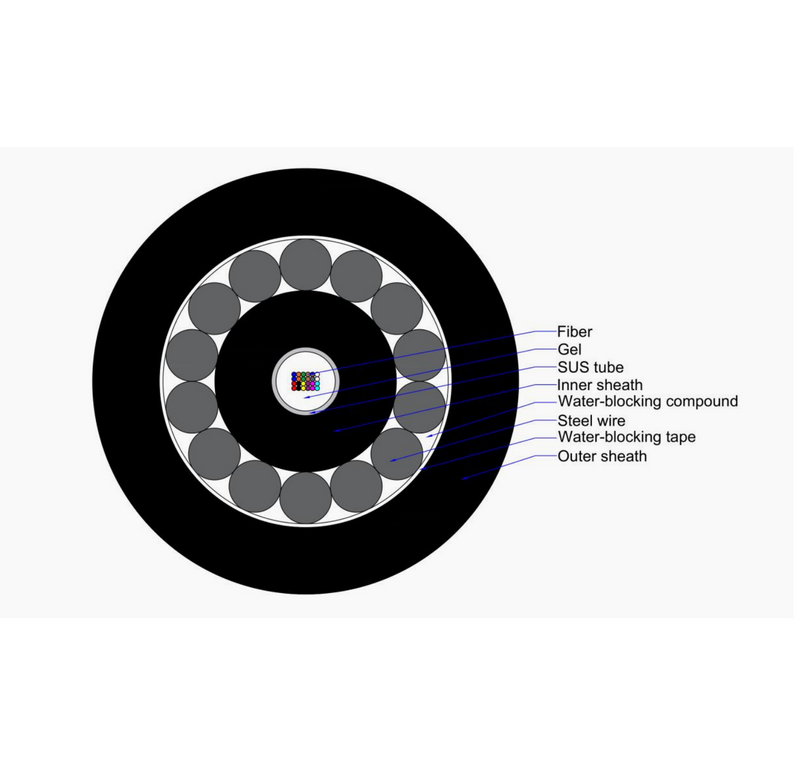
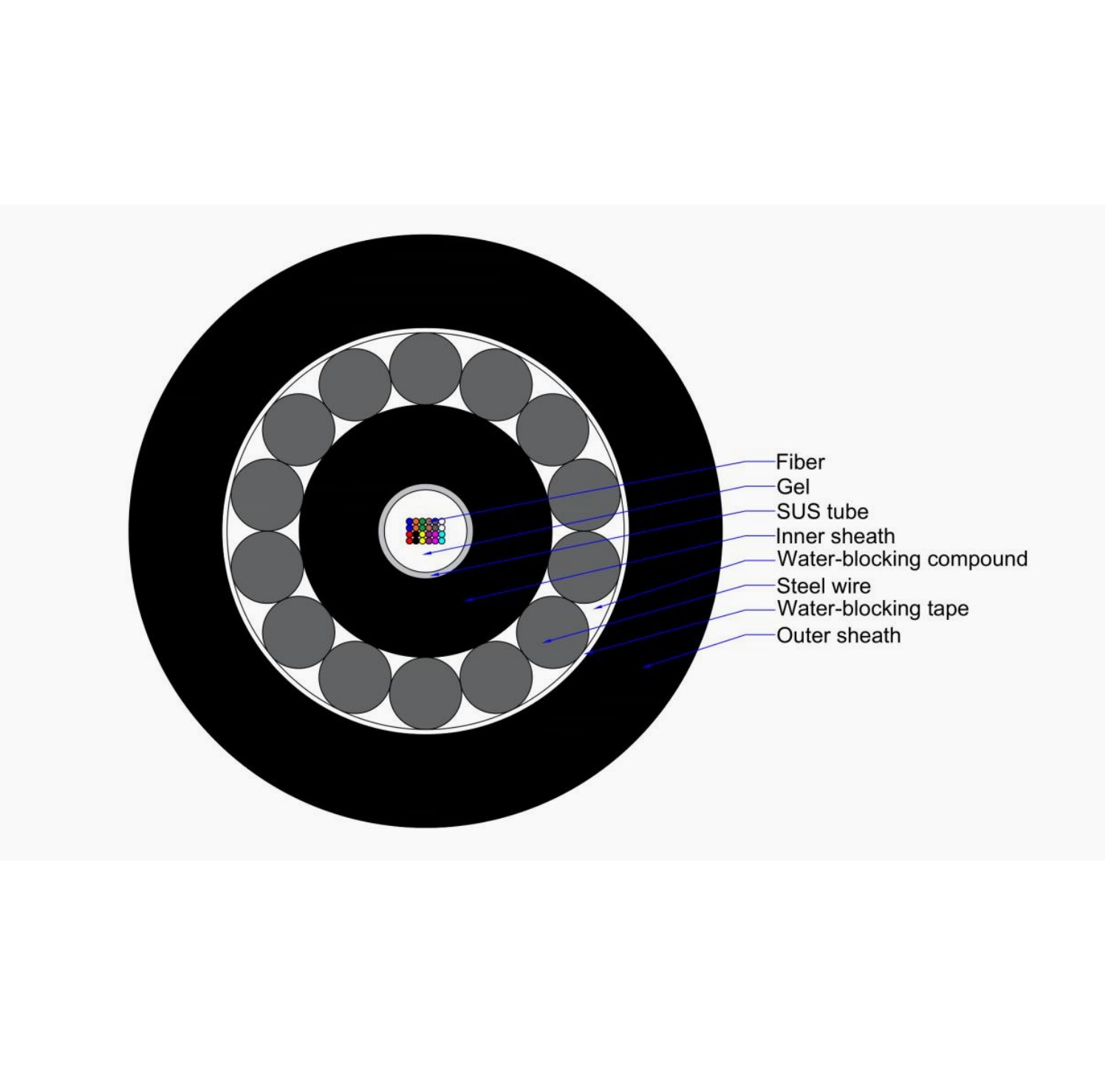
Typical Structure
Typical submarine fiber optic cable structure includes:
Technical Specifications
Example parameters:
Fiber type: G.652D / G.655
Fiber count: 12 – 144 cores
Armor type: Single / Double armor
Tensile strength: up to 200 kN
Installation depth: up to 6000 m
FAQ
What is a submarine fiber optic cable?
A submarine fiber optic cable is a type of communication cable designed for installation under the sea. It uses optical fibers to transmit large volumes of data over long distances with minimal signal loss.
These cables are essential for global telecommunications, connecting continents, islands, offshore platforms, and data centers. They are specially engineered with waterproof layers, strength members, and armored protection to withstand harsh marine environments.
How deep can submarine cables be installed?
Submarine fiber optic cables can typically be installed at depths of up to 6,000 meters in deep ocean environments.
In deep sea areas, cables are usually unarmored or lightweight to reduce cost and weight
In shallow waters, cables are heavily armored to protect against external damage
The installation depth depends on seabed conditions, project design, and environmental factors.
What is the difference between shallow water and deep sea cable?
The main difference lies in the level of protection and mechanical strength:
Shallow water cables
Double armored (DA) or single armored (SA)
High mechanical protection
Designed to resist fishing activity, anchors, and external impacts
Deep sea cables
Lightweight or non-armored
Focus on long-distance transmission efficiency
Lower risk of external damage
Shallow water cables prioritize protection, while deep sea cables prioritize transmission performance and cost efficiency.
How long can submarine optical cables last?
Submarine fiber optic cables are typically designed for a service life of 25 years or more.
With proper design, installation, and maintenance, many systems can operate reliably beyond their expected lifespan. The durability depends on factors such as cable quality, installation conditions, and environmental exposure.