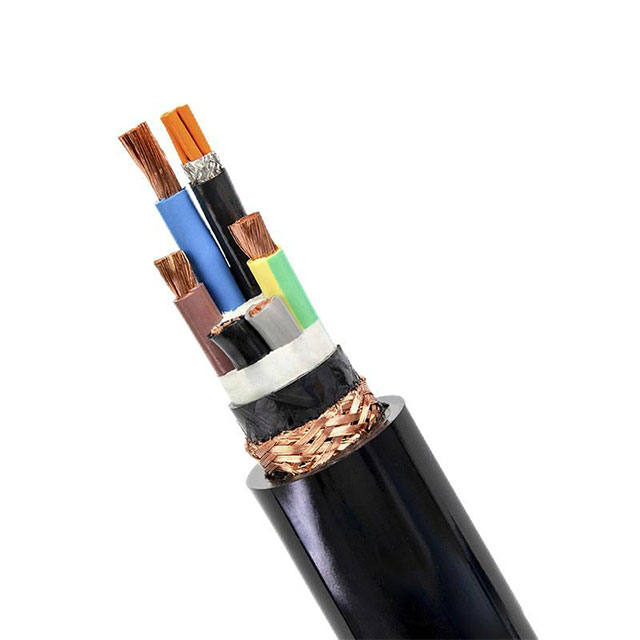
Yes, there is a meaningful difference between Marine Cable and regular wire, but the distinction involves more than a corrosion-resistant coating. Marine installations expose power, control, and signal circuits to moisture, salt, vibration, temperature changes, mechanical stress, and electromagnetic interference. A cable must therefore match both the electrical load and its exact operating environment. This article explains how marine wire differs from conventional wiring, where each construction is appropriate, and what engineers should examine when selecting cables for marine automation.
Marine Cable Is an Application Category, Not One Construction
The term Marine Cable covers several product families with very different duties. Small-vessel battery wire, fixed shipboard power cable, instrumentation cable, offshore control cable, and submarine transmission cable cannot be treated as interchangeable products. IEC 60092-350, for example, addresses copper-conductor power, control, and instrumentation cables for fixed shipboard and offshore systems, while excluding subsea and umbilical cables from its scope. A specification must therefore identify the installation type before discussing conductor material, insulation, shielding, armor, or voltage.
This distinction is especially important when comparing marine wire with Residential Electrical Wire. The residential product is presented for indoor distribution, appliances, lighting, switches, and other household circuits, with PVC or XLPE insulation among its available constructions. Those applications do not automatically include continuous vibration, salt-laden humidity, deck exposure, bilge moisture, or offshore installation stresses. A matching conductor size alone does not establish that household wire is suitable for a vessel.
Submarine transmission represents the opposite end of the category. The company’s HV Submarine Cable is described with copper or aluminum conductors, single- or three-core configurations, XLPE insulation, water-blocking layers, and steel wire or steel tape armor. Its stated voltage range extends from 66 kV to 400 kV, and its applications include offshore wind connections, island electrification, coastal grids, and offshore platform power supply. That construction solves underwater transmission challenges rather than ordinary onboard branch-circuit wiring.
How Marine Cable Construction Differs from Regular Wire
The main difference is that Marine Cable is engineered as a complete system for a defined environment. The conductor, insulation, sheath, screening, armor, fillers, water barriers, and markings must work together. Regular wire may perform adequately in a protected land-based location, yet deteriorate or become unreliable when installed where movement, moisture, chemicals, or mechanical damage are expected. The following comparison shows the practical questions behind the distinction.
Selection Factor
Marine Cable
Regular Wire
Conductor
Usually stranded for installation movement and vibration
May be solid or stranded, depending on the building or equipment application
Moisture Protection
Sheath and construction selected for humid, wet, weather-exposed, or submerged conditions
Protection depends on its specific listing and intended location
Corrosion Resistance
Materials may be selected for salt, chemicals, oil, or humid air
Not automatically suitable for saline or chemically aggressive environments
Mechanical Design
May include higher flexibility, reinforcement, screening, or armor
Often designed for protected conduits, walls, panels, or stationary equipment
Fire Behavior
May require flame-retardant or low-smoke construction for enclosed spaces
Requirements vary by building code and installation type
Signal Performance
Control and instrumentation versions may use screening to limit interference
General-purpose power wire may not provide signal shielding
Compliance
Selected against vessel, offshore, class, or project standards
Selected against residential, commercial, industrial, or equipment standards
Conductor Flexibility and Vibration Resistance
Marine systems move even when the cable route appears fixed. Hull vibration, engine operation, pumps, rotating equipment, wave motion, and repeated thermal expansion can stress conductors and terminations. Regulations for several inspected vessel categories require stranded copper conductors with sufficient current-carrying capacity, protection from weather and chafing, and installation without sharp bends. These requirements demonstrate why a rigid or poorly supported conductor can be unsuitable even when its nominal gauge appears correct.
Fine stranding can improve routing flexibility and reduce concentrated stress near terminals, but strand count is not a substitute for correct cable support. A flexible Marine Cable can still fail when it is pulled beyond its allowable tension, bent too tightly, clamped incorrectly, or allowed to rub against a sharp edge. Engineers should evaluate minimum bending radius, cable-tray support, gland compatibility, termination method, and expected movement together. Flexibility is a design characteristic, not permission for uncontrolled motion.
Moisture and Corrosion Protection
Water resistance and corrosion resistance are related but separate requirements. An outer sheath may resist occasional splashing while the conductor or screen remains vulnerable if water enters through a damaged jacket or poorly sealed termination. Salt contamination increases the importance of compatible sheathing, sealed glands, protected connectors, and disciplined inspection. Marine Cable selection must therefore consider where water can enter, how long exposure may continue, and whether chemicals, fuels, oils, or cleaning agents are also present.
The company’s Waterproof Cable category includes constructions intended for moist or submerged conditions and describes rubber, PVC, and silicone among the material options used across the category. Its Corrosion-Resistant Cable category focuses on exposure to moisture, chemicals, salty air, and aggressive industrial conditions, with PVC, TPE, or rubber identified as possible protective materials. These descriptions reinforce the need to specify environmental resistance rather than relying only on the word “marine.”
Fire, Smoke, Screening, and Mechanical Protection
A marine installation may also require flame-retardant, low-smoke, low-halogen, screened, or armored construction. These properties solve different hazards. Low-smoke materials can improve conditions in enclosed occupied spaces during a fire, screening can reduce electromagnetic interference in sensitive circuits, and armor can protect against crushing or installation forces. None of these features should be assumed merely because a product is called Marine Cable.
Armor is particularly application-specific. Heavy metallic armor is logical for subsea power transmission exposed to laying tension, seabed friction, and external mechanical forces, but it may be unnecessary for a short sensor connection inside a protected automation cabinet. Likewise, a shielded instrumentation cable may be essential near variable-frequency drives while adding little value to an uncomplicated lighting circuit. The correct construction comes from the route, electrical function, hazard analysis, and installation standard.
Why the Difference Matters in Marine Automation
Marine automation combines power distribution with sensors, actuators, programmable controllers, alarms, communication equipment, motor drives, and remote monitoring. A single vessel may contain low-level analog signals, digital data, high-current motor feeds, and emergency circuits within a limited routing area. Poor cable selection can produce intermittent signals, nuisance alarms, unstable control loops, communication errors, excessive voltage drop, or premature terminal corrosion. The result may appear to be a software or component fault even though the underlying problem is the wiring system.
Control and instrumentation circuits need particular attention to screening, core identification, pair construction, grounding strategy, and separation from power cables. IEC 60092-376:2025 covers screened and unscreened fixed cables for ship and offshore control and instrumentation circuits rated 150/250 V (300 V). The standard’s scope shows that marine automation cable is a defined technical category rather than ordinary hookup wire installed in a marine location.
The company’s Flexible Control Cable page describes multi-core, screened, armored, and low-smoke halogen-free options. It also identifies copper-wire or aluminum-foil screening for interference reduction and states that suitable versions can be used for ship automation and offshore control systems exposed to salt spray and moisture. These are relevant characteristics for connecting controllers, sensors, actuators, monitoring devices, and distributed control panels.
Routing and termination remain as important as the cable itself. Signal cables should be separated from high-noise power circuits where required, shields should be terminated according to the system design, and cable glands should preserve environmental protection at enclosure entries. Vessel wiring should also be installed to reduce electromagnetic interference while protecting cables from weather, sharp bends, chafing, and mechanical abuse.
Can Regular Wire Ever Be Used in a Marine Installation?
A blanket rule that every cable aboard a vessel must have the same marine-grade construction is too simplistic. Some protected equipment interiors, portable appliances, or specialized circuits may use cable governed by a different product standard. However, substitution is acceptable only when the chosen wire’s listing, voltage, temperature, flame behavior, conductor construction, chemical resistance, and installation method satisfy the applicable vessel rules and project specification. Location alone does not determine suitability, but neither does conductor gauge.
For certain inspected vessels, regulations permit several compliance paths for power and lighting wiring, including recognized boat cable, marine cable, or other specified constructions. The applicable rules may exclude dry-location cable and require stranded conductors, environmental protection, adequate ampacity, and suitable installation. The exact requirements should be confirmed against the vessel type, jurisdiction, classification rules, and project documents.
It is also inaccurate to define every Marine Cable solely as tinned copper wire. Tinning can improve corrosion resistance and is common in certain boat-cable products, but the applicable standard, listing, and complete construction should be checked instead of assuming that conductor color proves suitability. Large submarine cables may use copper or aluminum conductors with water-blocking systems and armor, while shipboard control cables may prioritize screening, fire behavior, core arrangement, and environmental sheathing. The product marking and technical data are more reliable than a visual inspection.
Regular wire should not be selected simply because it is cheaper, available locally, or has the same nominal cross-sectional area. A cable that fails early can require extensive troubleshooting, removal of panels, interruption of vessel operations, and replacement of contaminated terminations. In automation systems, gradual insulation or conductor deterioration may create intermittent faults long before complete electrical failure. These hidden maintenance consequences often outweigh the initial material saving.
How to Select Marine Cable for an Automation Project
Begin with the circuit function rather than a generic request for Marine Cable. Identify whether the circuit carries main power, motor power, emergency power, digital communication, analog instrumentation, alarms, actuator commands, or low-energy sensor signals. Each function creates different requirements for voltage drop, conductor size, screening, core arrangement, temperature, flexibility, and electromagnetic compatibility.
Next, divide the cable route into actual environmental zones. A control-room tray, machinery space, exposed deck, splash area, bilge, offshore module, and subsea crossing should not automatically receive the same construction. Record expected moisture, salt, oil, chemicals, sunlight, temperature, vibration, movement, fire risk, crushing forces, and immersion conditions. A specification based on these exposures is more useful than a broad instruction to use marine-grade wire.
Procurement teams should verify at least the following information before approval:
Electrical duty: Rated voltage, load current, allowable voltage drop, short-circuit conditions, and conductor size.
Circuit type: Power, control, instrumentation, communication, emergency, or safety-related service.
Environment: Indoor, exposed, wet, corrosive, oil-contaminated, submerged, or mechanically hazardous.
Finally, request documents that identify the exact offered construction rather than accepting a generic product-family description. Datasheets, cable drawings, test requirements, drum lengths, core identification, and marking details should correspond to the project specification. Marine Cable approval should occur before route design and gland selection are finalized, because outside diameter, weight, flexibility, and armor can affect tray loading, enclosure entries, and installation labor.
Conclusion
Marine Cable differs from regular wire because its complete construction is selected for marine electrical duties and environmental stresses, not simply for conductor size. Marine automation projects should evaluate moisture, corrosion, vibration, fire behavior, signal interference, routing, and compliance before approving any cable. Yongchuang is a manufacturer offering power, submarine, control, waterproof, and corrosion-resistant cable categories. Matching the precise cable design to each circuit and installation zone can improve system reliability, simplify maintenance, and reduce avoidable automation faults.
FAQ
Q: Can regular electrical wire be used on a boat?
A: Only when its construction, listing, environmental rating, and installation method satisfy the applicable vessel rules. Ordinary dry-location household wire should not be treated as a default substitute.
Q: Is all Marine Cable made with tinned copper?
A: No. Tinned copper is common in some boat wiring, but marine products may use bare copper, tinned copper, or aluminum depending on the application and standard.
Q: What Marine Cable is suitable for marine automation?
A: The choice may include screened multi-core control or instrumentation cable with suitable moisture, corrosion, fire, voltage, temperature, and mechanical ratings for the installation zone.
Q: Is waterproof cable the same as Marine Cable?
A: Not necessarily. Waterproofing addresses water ingress, while marine suitability may also require corrosion resistance, flame performance, flexibility, screening, mechanical protection, and vessel-specific compliance.
Q: Does every marine automation cable need shielding?
A: No. Shielding is selected according to signal sensitivity, nearby electrical noise, equipment instructions, grounding design, and routing. Many power circuits do not require the same screening as instrumentation.