Salt spray, condensation, bilge moisture, and humid air can reach a cable through cut ends, imperfect glands, damaged jackets, or poorly sealed terminals. Once moisture touches bare copper strands, corrosion can spread under the insulation and gradually raise resistance.
This is why Marine Cable commonly uses tinned copper rather than uncoated copper. The tin layer does not make a cable waterproof, but it adds a corrosion-resistant barrier around the conductor. Understanding that distinction helps engineers specify Marine Cable more accurately for marine automation, offshore energy, and other wet, vibration-prone electrical systems.
Why Tinning Matters in Saltwater Electrical Systems
Marine Cable is tinned primarily to slow corrosion at the conductor surface. Copper provides strong electrical conductivity, but exposed copper reacts with oxygen, moisture, salts, and other contaminants. In a marine environment, dissolved salts make moisture more electrically conductive and support electrochemical corrosion. The resulting oxide and corrosion layers can reduce the quality of contact between strands, terminals, and connectors. Over time, this can contribute to voltage drop, intermittent operation, localized heating, or complete circuit failure.
The risk does not require full immersion. Humid air, condensation inside enclosures, salt mist, wet cable trays, and occasional splashing may be enough to start corrosion where copper is exposed. Moisture can also enter at a termination and move between fine strands beneath the insulation through capillary action. A fault may therefore develop farther along the conductor than the visible wet area. Tinning each copper strand gives Marine Cable an additional barrier that delays direct contact between copper and the surrounding environment.
Conductor Condition
Typical Response to Moisture
Practical Consequence
Bare copper strands
Copper is directly exposed when moisture enters
Corrosion may spread beneath insulation
Tinned copper strands
Tin delays direct exposure of the copper surface
More time before corrosion affects conductor performance
Either conductor with poor sealing
Water can enter through open or damaged terminations
The value of tinning becomes greater where access is difficult or downtime is expensive. Replacing a short cable inside an accessible panel may be straightforward, but replacing wiring inside a vessel, offshore platform, turbine structure, or sealed automation assembly can require significant disassembly. Marine Cable therefore uses tinning as a lifecycle risk-control measure. It does not eliminate maintenance, but it reduces the conductor’s vulnerability when environmental protection is imperfect.
What the Tin Layer Changes—and What It Cannot Prevent
Tinned copper is produced by applying a thin tin coating to the copper conductor strands. The underlying copper continues to carry most of the electrical current, while the outer tin layer reduces direct exposure to moisture and corrosive contaminants. Because the strands remain separate, a properly constructed Marine Cable can retain the flexibility needed for routing through machinery, cabinets, bulkheads, and confined vessel spaces. Tinned strands are also less likely to present heavily oxidized surfaces when a cable is stripped for inspection or retermination.
Tinning is especially useful for finely stranded conductors because their combined surface area is much larger than that of one solid conductor with a similar cross-sectional area. More surface area improves flexibility but creates more potential contact area for moisture. Coating individual strands addresses that vulnerability without replacing copper with a less conductive base material. However, buyers should verify that the specified cable actually uses tinned copper throughout the conductor rather than assuming every product described as marine suitable has the same construction.
The limitation is equally important: tinning does not seal the cable. Cutting the conductor exposes its cross-section, while poor crimps, loose glands, jacket damage, and unsealed splices still provide paths for water. Tin can also corrode under sufficiently severe or prolonged exposure. Marine Cable must therefore combine tinned conductors with suitable insulation, jackets, glands, connectors, and termination methods. Sealing exposed conductor ends remains essential even when tinned wire is used.
Why Tinned Marine Cable Matters in Automation and Offshore Energy
The benefit of tinning depends on the circuit, environment, and consequences of failure. Marine automation and offshore energy systems contain both power and signal circuits, but they do not experience identical electrical or mechanical stresses. Engineers should treat tinned conductors as one part of an application-specific cable design rather than as a universal specification that resolves every exposure risk.
Marine Automation
Automation systems rely on stable power for controllers, sensors, actuators, relays, valves, alarms, and communication equipment. A small increase in conductor or terminal resistance can be significant in low-voltage circuits, particularly where the cable run is long or the connected device has a narrow operating-voltage range. For onboard distribution, the selected Low Voltage Power Cable must first match the circuit voltage, current, allowable voltage drop, and installation method. Tinning then adds environmental protection where humidity and salt exposure could otherwise affect the copper conductor.
Marine automation also involves enclosures, deck equipment, cable transits, and junction boxes that may experience condensation or occasional water entry. Selecting a Waterproof Cable category can help address wet operating conditions, but water resistance must be evaluated as a complete system. The jacket, water-blocking layers, cable gland, connector seal, and enclosure rating all influence whether water reaches the conductor. Tinned Marine Cable provides a secondary line of protection when the primary moisture barrier becomes damaged or imperfect.
Offshore Energy
Offshore wind installations, substations, oil and gas platforms, and subsea production systems expose cables to salt spray, humidity, vibration, temperature variation, mechanical loading, and difficult maintenance conditions. Tinned copper helps protect accessible conductor surfaces, but the overall Marine Cable design must also resist its specific external environment. A Corrosion Resistant Cable may require protective jacket materials or structures suited to humid, salty, coastal, or chemically aggressive locations. The conductor coating and outer protection solve different parts of the same reliability problem.
Hydraulic equipment, generators, gearboxes, lubricated machinery, and processing areas can expose offshore wiring to oils and grease as well as seawater. An Oil Resistant Cable uses insulation or jacket materials intended to withstand such contact, while tinned copper protects the conductor if contamination and moisture penetrate farther into the assembly. Neither feature replaces the other. A Marine Cable may need corrosion resistance, oil resistance, water resistance, flame performance, shielding, and mechanical protection simultaneously, depending on its route and function.
How to Specify Tinned Marine Cable Correctly
The words “tinned copper” describe only the conductor surface. They do not define voltage rating, conductor size, flexibility, insulation, shielding, jacket durability, water blocking, or compliance. Procurement teams should therefore specify Marine Cable from the complete operating profile instead of using tinning as the only acceptance criterion.
Specification Factor
What to Verify
Why It Matters
Conductor
Copper type, tinning, strand class, and cross-sectional area
Affects conductivity, flexibility, voltage drop, and corrosion tolerance
Electrical rating
Voltage, current capacity, short-circuit duty, and temperature rating
Prevents insulation stress and conductor overheating
Water protection
Jacket performance, water-blocking layers, glands, and connectors
Controls the main paths through which moisture can enter
Chemical exposure
Resistance to oil, fuel, cleaning agents, acids, or alkalis
Prevents jacket swelling, cracking, softening, or loss of insulation
Mechanical duty
Bending radius, vibration, tensile load, abrasion, and impact
Determines suitability for fixed, flexible, or moving installations
Signal requirements
Shielding, pair construction, impedance, and grounding approach
Supports reliable automation and communication performance
Fire performance
Flame spread, smoke, halogen, and circuit-integrity requirements
Aligns the cable with compartment and emergency-system risks
Documentation
Applicable standards, test reports, batch records, and installation data
Allows engineering review and project traceability
Route conditions should be divided into practical exposure zones. A dry control cabinet, humid machinery room, exposed deck, splash zone, submerged route, and moving equipment connection may all require different Marine Cable constructions. The same project can therefore use several cable types rather than one general marine specification. Engineers should also define whether the installation is fixed or continuously flexing, because fine stranding alone does not guarantee suitability for repeated motion.
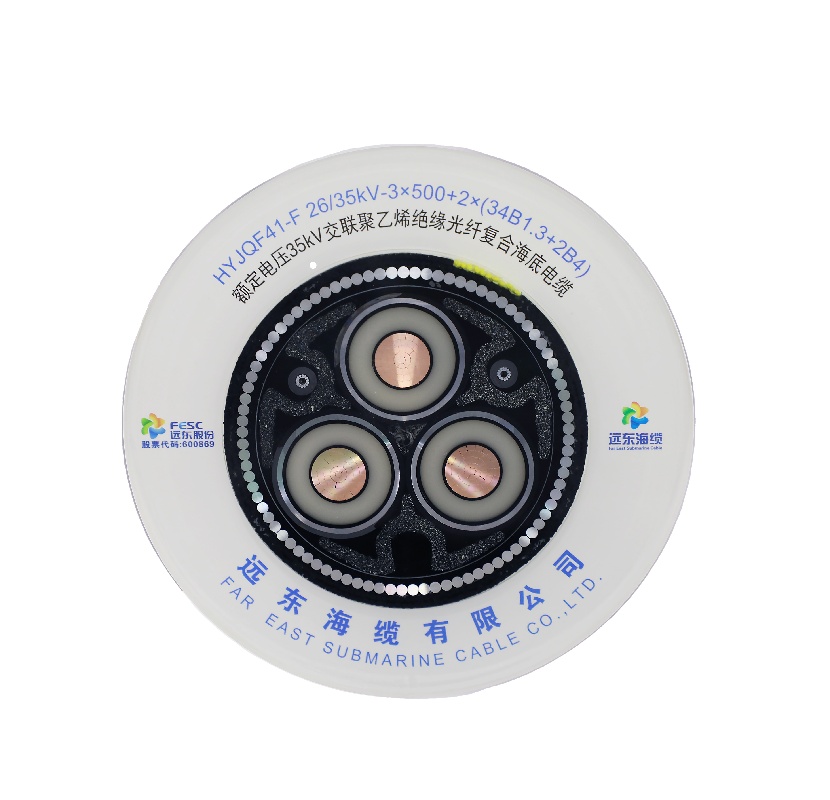
For offshore energy projects, mechanical and environmental details should be established early. Installation depth, seabed conditions, tensile loads, armor requirements, and water-blocking structures can determine the entire construction of a submarine or subsea cable. Armored, waterproof, and corrosion-resistant structures may be required for power, control, and communication connections serving offshore facilities.
Installation Practices That Preserve the Benefit of Tinning
Correct installation determines whether the corrosion resistance of Marine Cable is maintained in service. Terminations should use compatible crimp tools, dies, lugs, ferrules, glands, and connectors sized for the conductor. Adhesive-lined heat-shrink components or purpose-designed sealed connectors can reduce moisture entry around cable ends. The seal should grip the jacket or insulation without leaving a capillary path directly to the strands. Solder should not be used as a substitute for mechanical support where vibration could concentrate stress at the end of a rigid soldered section.
Cable routing also matters. Marine Cable should be protected from sharp edges, unsupported spans, hot surfaces, standing water, excessive tension, and bending below its specified radius. Grommets, supports, cable trays, conduits, and strain relief reduce jacket damage that could expose internal layers. Drip loops and correctly oriented glands can prevent water from flowing directly into enclosures. Where cables must pass through wet or contaminated areas, reducing the number of joints usually reduces potential ingress points.
Inspection should focus on both the cable and its connections. Warning signs include cracked jackets, swollen insulation, green or black conductor discoloration, loose terminals, abnormal voltage drop, intermittent signals, and heat around connection points. A tinned Marine Cable may tolerate environmental exposure longer than bare copper, but visible damage should not be ignored. Early repair is usually less disruptive than waiting until corrosion has migrated beneath the insulation and clean conductor can no longer be reached easily.
Conclusion
Marine Cable is tinned because the coating delays direct corrosion of copper strands in humid, salty, and difficult-to-access environments. Its value is greatest when combined with correct conductor sizing, environmental jackets, water blocking, sealed connections, mechanical protection, and disciplined routing.
Tinning should therefore be treated as a reliability layer, not a complete waterproofing method. As a manufacturer with documented cable production, testing, and marine product capabilities, Yongchuang can support application-based selection across low-voltage, waterproof, corrosion-resistant, and oil-resistant cable requirements.
FAQ
Q: Is all Marine Cable made with tinned copper?
A: No. Construction varies by application, manufacturer, and governing specification. Buyers should confirm conductor material and tinning directly in the technical datasheet or approved project documentation.
Q: Does tinned copper conduct electricity as well as bare copper?
A: The copper beneath the thin tin layer carries most of the current. Proper conductor sizing remains more important to ampacity and voltage drop than the coating itself.
Q: Can tinned Marine Cable still corrode?
A: Yes. Cut ends, damaged jackets, poor seals, and prolonged chemical exposure can still permit corrosion. Tinning delays conductor deterioration but does not make the assembly immune.
Q: Why is ordinary automotive wire risky in marine systems?
A: It may lack the conductor coating, environmental jacket, flame properties, flexibility, or documentation required for persistent moisture, salt exposure, vibration, and confined marine installations.
Q: Does tinning replace a waterproof cable jacket?
A: No. Tinning protects the conductor surface, while the jacket and water-blocking system prevent moisture entry. Reliable installations need both appropriate construction and sealed terminations.