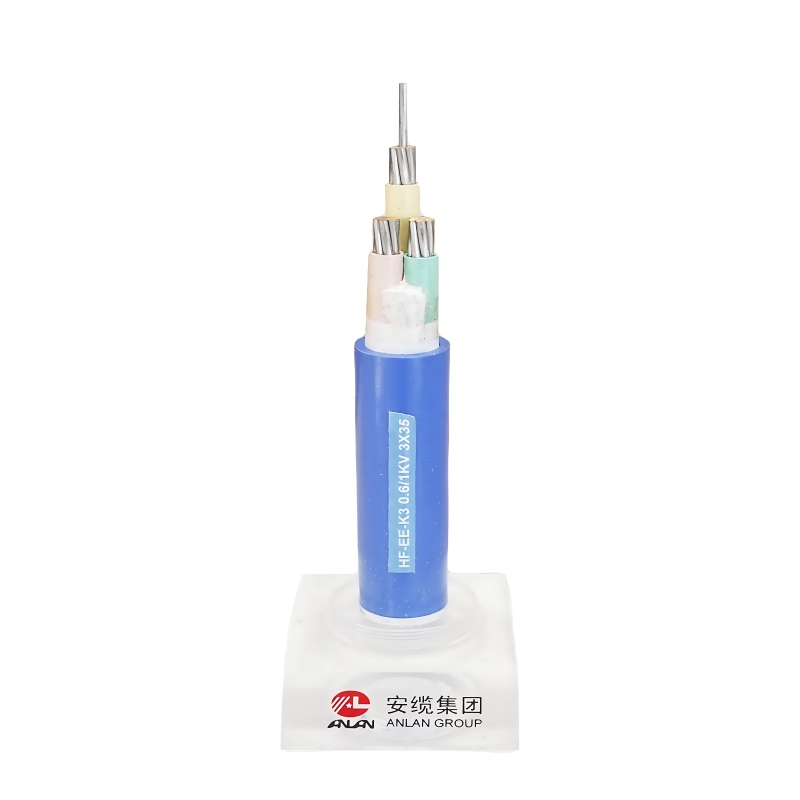
Nuclear power plant (NPP) electrical systems require zero-fail reliability under extreme operational and accident conditions. When critical systems fail, the consequences quickly become catastrophic. Specifying the wrong cable compromises plant safety, fails strict regulatory audits, and leads to costly unplanned outages. Upgrading or constructing safety-related systems requires you to navigate rigorous Environmental Qualification (EQ) standards. This leaves zero room for assumptions during the procurement process.
We will provide engineering and procurement teams with a strict evaluation framework for sourcing compliant materials. You will discover actionable insights on material survivability, strict testing protocols, and verifiable vendor quality assurance. By understanding these technical requirements, you can confidently navigate regulatory landscapes and secure the integrity of your safety-related applications.
Key Takeaways
Class 1E is non-negotiable for safety systems: Cables must guarantee continuous operation during and after Design Basis Events (DBEs), including Loss of Coolant Accidents (LOCA).
Radiation resistance dictates lifespan: Polymer degradation from gamma exposure requires extensive accelerated aging test data (typically validating 40- to 60-year lifespans).
Fire survivability goes beyond standard commercial ratings: A true nuclear-grade fire resistant cable must maintain circuit integrity without releasing corrosive gases that degrade adjacent critical equipment.
Vendor selection relies on QA traceability: Procurement must verify 10 CFR 50 Appendix B and NQA-1 compliance; the documentation trail is as critical as the physical cable.
The Baseline for Safety: Defining Class 1E Nuclear Cable
Safety in a nuclear facility relies on a clear, uncompromising classification system. Regulatory bodies define "Class 1E" as the mandatory safety classification for electrical equipment. This equipment proves essential for emergency reactor shutdown, containment isolation, and reactor core cooling. Without these critical functions, a plant cannot safely manage an accident scenario.
Engineers must differentiate strictly between Class 1E applications and non-Class 1E applications. Non-Class 1E systems typically fall under the Balance of Plant (BOP) category. BOP systems do not require full Environmental Qualification (EQ). However, safety-related systems demand a certified Class 1E Nuclear Cable to guarantee functionality during extreme stress.
The foundation of this qualification lies in IEEE 383. This standard dictates the rigorous testing protocols necessary for Class 1E components. The Nuclear Regulatory Commission (NRC) endorses IEEE 383, making it the bedrock of regulatory compliance. Qualification requires extensive type testing, verifiable operating experience, and deep analytical review.
When you evaluate materials, consider the facility design framework. Older plants might require legacy compliance based on earlier IEEE standard editions. New constructions or major upgrades demand adherence to the most current regulatory framework. This directly impacts your vendor selection. You must verify if a manufacturer holds current certifications or if they can support legacy equivalence.
Emergency Reactor Shutdown: Cables must deliver uninterrupted power to control rod drive mechanisms.
Containment Isolation: Circuits must power valves to seal the reactor building instantly.
Core Cooling: Systems must maintain pump operations to prevent thermal runaway.
Radiation and Environmental Qualification (EQ) Parameters
Nuclear environments expose materials to relentless stress. Continuous low-level ionizing radiation and high-temperature environments cause severe polymer degradation. Over time, typical insulators suffer from embrittlement and a complete loss of elongation. This physical breakdown eventually leads to catastrophic dielectric failure.
To combat this, engineers calculate the Total Integrated Dose (TID). You must specify cables tested for normal operational TID over a 40- to 60-year lifespan. Furthermore, the cable must survive accident-condition doses. During a Loss of Coolant Accident (LOCA), the area experiences massive gamma exposure. The cable must absorb this radiation spike and remain electrically viable.
Manufacturers rely on highly specialized compounds to survive these conditions. Common nuclear-grade materials include Cross-linked Polyethylene (XLPE), Ethylene Propylene Rubber (EPR), and Chlorosulfonated Polyethylene (CSPE). Each material offers unique trade-offs regarding flexibility, thermal tolerance, and radiation endurance.
Table 1: Nuclear-Grade Insulation Material Comparison
Material Type
Flexibility
Thermal Tolerance
Radiation Endurance
Common Application
XLPE (Cross-linked Polyethylene)
Low to Moderate
Excellent (Up to 90°C normal)
Very High (Resists embrittlement well)
Power and heavy control circuits
EPR (Ethylene Propylene Rubber)
High
Excellent (Highly stable)
High (Great dielectric retention)
Instrumentation and flexible routing
CSPE (Chlorosulfonated Polyethylene)
Moderate
Good
High (Excellent jacket material)
Outer jacketing and protection
You cannot guess a cable's lifespan. Reliable lifetime predictions require accelerated aging testing. Trustworthy vendors back their 40, 60, or 80-year lifespan claims with transparent Arrhenius methodology. They provide empirical laboratory data from extensive thermal and radiation aging chambers. Theoretical models alone do not satisfy NRC auditors.
Specifying Fire Resistant Cable for Nuclear Environments
Fire presents one of the most severe threats to a nuclear power plant. A standard commercial flame-retardant rating falls dangerously short here. A true nuclear Fire Resistant Cable must survive localized fires while maintaining electrical circuit integrity. Critical safety systems must remain online even while the cable jacket burns.
You must look for specific testing standards. IEEE 1202 outlines the rigorous flame testing of cables used in cable trays. Relevant IEC equivalents also provide global benchmarks for flame propagation and circuit integrity. These tests simulate aggressive vertical tray fires, ensuring the flame does not travel along the cable pathway.
Material chemistry plays a vital role in fire safety. The industry actively shifts toward Low Smoke Zero Halogen (LSZH) materials. Traditional halogenated jackets release toxic, highly corrosive gases during a fire. These gases spread through ventilation systems and attack adjacent electronic relays. This secondary failure often disables systems far removed from the actual fire. LSZH materials prevent this corrosive damage entirely.
Engineers must also account for Design Basis Fire Limits. Specific Appendix R fire protection regulations mandate strict localized barriers. Cable construction often incorporates synthetic mica tapes and specialized armor. These physical layers act as a localized thermal barrier. They block direct heat from reaching the copper conductor, preserving the critical signaling pathway for safe shutdown.
Evaluating Manufacturer Capabilities and QA Programs
In nuclear procurement, undocumented quality equals non-compliance. If you cannot prove the pedigree of a component, you cannot install it in a safety-related system. The "paper trail" serves as the definitive proof of your facility's safety margin.
You must rigorously audit your chosen nuclear cable manufacturer. They must operate a formally audited and active nuclear Quality Assurance program. In the United States, this means strict adherence to 10 CFR 50 Appendix B and ASME NQA-1. This traceability cannot stop at the finished product. It must extend down to the raw compound batch level, logging exactly which polymer mix formed your specific cable.
Verify the NQA-1 Manual: Request the manufacturer's active Quality Assurance manual. Ensure it undergoes regular independent audits.
Check Testing Infrastructure: Determine if the vendor uses in-house testing or relies on third-party labs. Internal capabilities for LOCA simulation and flame testing often signal a more mature engineering team.
Audit Batch Traceability: Ask for sample documentation tracing a finished reel back to the raw copper and polymer pellet origins.
Some facilities attempt Commercial Grade Dedication (CGD) to save time or money. CGD involves taking a standard commercial component and testing it rigorously to prove it meets safety-related standards. We strongly advise against dedicating commercial cables if certified Class 1E options exist. The engineering justification requires massive effort, and the failure risk during dedication remains exceptionally high.
Implementation Risks, Lead Times, and Procurement Strategy
Procuring materials for nuclear applications rarely involves off-the-shelf inventory. You face distinct custom engineering realities. Most safety-related cables are engineered-to-order. Manufacturers tailor the conductor sizing, insulation thickness, and shielding to match your specific plant parameters.
Obsolescence management creates significant headaches for aging plants. Many original manufacturers from the 1970s and 1980s no longer exist. When you replace these legacy systems, you must source "Form, Fit, and Function" equivalent replacements. The new product must match the physical dimensions and electrical properties of the old product perfectly to maintain the facility's existing EQ profile.
Table 2: Procurement Timeline Risk Chart
Project Phase
Typical Duration
Primary Scheduling Risk
Engineering & Design
4 to 8 Weeks
Misalignment between legacy plant specs and current IEEE standards.
Raw Material Sourcing
6 to 12 Weeks
Global shortages of specialized nuclear-grade polymers or high-purity copper.
Custom Extrusion Run
8 to 16 Weeks
Factory scheduling conflicts and strict NQA-1 hold-point inspections.
Factory Acceptance Testing (FAT)
2 to 4 Weeks
Failures during flame or dielectric tests requiring complete remanufacturing.
Project scheduling risks multiply quickly. You must factor in extended lead times for raw material sourcing. Specialized extrusion runs take time, and mandatory factory acceptance testing (FAT) adds weeks to the schedule. A delayed shipment can force a plant to extend a refueling outage, costing millions of dollars per day.
To mitigate these risks, use a strict shortlisting logic. We recommend filtering vendors based on three primary pillars. First, demand an active NQA-1 certification. Second, verify a legacy of installed operating experience in operational NPPs. Finally, assess their direct engineering support capabilities. A vendor must act as an engineering partner, not just a commodity supplier.
Conclusion
Procuring electrical components for nuclear environments is fundamentally an exercise in strict risk mitigation. It requires unwavering adherence to regulatory compliance. You cannot compromise on Class 1E certification, radiation survivability, or fire resistance. These elements represent non-negotiable performance metrics that directly impact human safety and grid stability.
Verify the standard: Always align your specifications with the exact IEEE 383 revision required by your plant's licensing basis.
Demand empirical data: Reject theoretical lifespan models. Insist on Arrhenius aging data and physical LOCA test reports.
Audit the paper trail: Ensure the manufacturer maintains flawless NQA-1 and 10 CFR 50 Appendix B documentation from raw material to final reel.
Engage vendors early: Initiate early-stage technical dialogues with qualified manufacturers to align design bases with production lead times.
FAQ
Q: What is the difference between Class 1E and commercial-grade industrial cable?
A: Class 1E cables undergo rigorous Environmental Qualification (EQ) testing to survive nuclear accidents like LOCAs. They require strict manufacturing traceability under 10 CFR 50 Appendix B and NQA-1 standards. Commercial-grade cables lack this verified safety-related documentation and extreme environmental testing.
Q: How is the lifespan of a nuclear cable determined?
A: Engineers determine lifespan using accelerated thermal and radiation aging tests. They expose samples to intense heat and gamma radiation in laboratory chambers. By applying the Arrhenius equation to this empirical data, they accurately predict degradation over 40 to 60 years of normal plant operation.
Q: Can LSZH cables meet Class 1E requirements?
A: Yes. Modern Low Smoke Zero Halogen (LSZH) cables can achieve Class 1E qualification. Manufacturers use specific proprietary cross-linked compounding. This ensures the halogen-free material successfully passes both extreme IEEE fire safety standards and rigorous LOCA radiation survivability tests.
Q: What is a Design Basis Event (DBE) in relation to cable performance?
A: A Design Basis Event (DBE) is a postulated emergency scenario, such as a Loss of Coolant Accident (LOCA) or a severe seismic event. The facility is specifically engineered to withstand these events. Cables must remain fully functional during and after a DBE to ensure safe reactor shutdown.