Sourcing infrastructure for nuclear power generation demands a zero-margin-for-error approach. Plant designers and procurement teams face immense pressure during every project phase. Evaluating suppliers based on commercial-grade metrics leads to catastrophic compliance failures. These missteps cause massive project delays. They also introduce unacceptable operational risks into critical safety systems. A single component failure can easily compromise reactor integrity. We must apply strict, evidence-based frameworks to avoid these disasters. You cannot leave critical infrastructure decisions to chance.
This guide provides procurement managers and electrical engineers clear evaluation strategies. You will learn how to shortlist and select highly reliable components effectively. We will explore complex regulatory baselines in detail. You will discover essential performance criteria like radiation resistance and fire retardancy. We also outline how to conduct rigorous manufacturer audits. Applying these methods ensures facility safety. It also guarantees long-term operational success for decades.
Key Takeaways
- Compliance is binary: Sourcing must begin with strict adherence to IEEE, IEC, and NRC regulatory baselines, specifically for 1E Class Cable.
- Material science dictates lifespan: Insulation compounds (like EPR and XLPE) must be evaluated against long-term thermal aging and cumulative radiation exposure data.
- Supplier vetting requires audits: Validating a manufacturer’s NQA-1 quality assurance program is as critical as testing the physical cable.
Regulatory Baselines: Defining Nuclear Safety Cable Requirements
We must clearly define the stakes before entering procurement. Facilities categorize equipment into safety-related and non-safety-related applications. Safety-related systems shut down the reactor safely during emergencies. They also mitigate the consequences of severe accidents. Non-safety systems manage general plant operations like administrative lighting. You cannot swap components between these two distinct categories.
Navigating 1E Class Cable standards requires deep technical rigor. This specific class covers electrical equipment critical to emergency reactor shutdown. These components must remain fully functional during and after a Design Basis Event (DBE). A DBE represents extreme scenarios. These include earthquakes, massive fires, or sudden radiation leaks. Standard industrial cables cannot achieve Class 1E status through simple paperwork upgrades. Manufacturers must build them using controlled, traceable processes from day one. You risk heavy regulatory fines if you install unverified commercial components in critical zones. The Nuclear Regulatory Commission (NRC) routinely inspects these supply chains.
Global certification frameworks guide successful sourcing globally. You must evaluate supplier adherence to strict IEEE codes. IEEE 323 covers the broad qualification of Class 1E equipment. It establishes the baseline for demonstrating environmental survivability. IEEE 383 dictates specific fire and qualification testing protocols for wire assemblies. These standards prove components can survive extreme environmental stress over time. For international project scopes, you should align your requirements against IEC 60780. This standard mirrors IEEE guidelines for global uniformity. Combining these rigorous frameworks protects your facility from unexpected regulatory audits. It also standardizes your engineering approach across multiple continents.
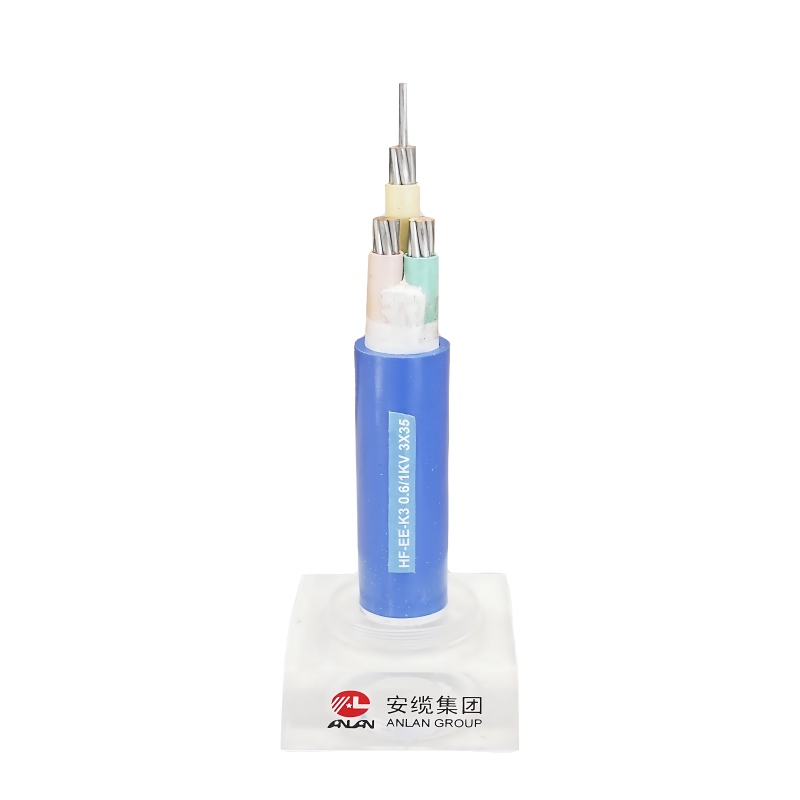
Essential Performance Criteria for Nuclear Power Cable
Every Nuclear Power Cable faces brutal environmental conditions. Evaluators must focus heavily on Loss of Coolant Accident (LOCA) survivability. A LOCA unleashes extreme steam and rapid pressure drops. It also introduces harsh chemical sprays into the containment area. Containment systems often spray boric acid and sodium hydroxide. These chemicals reduce ambient pressure and trap radioactive iodine. However, they are highly corrosive to standard polymers. Cables must function simultaneously under all these physical and chemical stressors. Your evaluation lens must remain strictly objective. Always request baseline LOCA test data from prospective suppliers. Do not rely on theoretical computer modeling. Models often fail to predict physical degradation accurately under simultaneous stressors.
Cumulative radiation resistance represents another critical safety benchmark. Procurement teams must assess degradation thresholds carefully. Facilities expose cables to continuous gamma and beta radiation over decades. Over time, radiation breaks down polymer chains at the molecular level. This phenomenon causes chain scission. It makes the insulation brittle and highly prone to cracking. You must request accelerated aging test data from your manufacturing partners. These tests reference methodologies established by major government material studies. NASA and OSTI provide excellent examples of long-term material breakdown studies. Real-world testing data ensures your components will not fail prematurely.
Fire retardancy and toxicity also demand thorough technical analysis. An internal fire poses catastrophic risks to sensitive reactor controls. You must analyze self-extinguishing properties during your evaluations. Verify flame spread limits rigorously. Ensure manufacturers avoid halogenated compounds completely. Halogens release highly corrosive, toxic gases when exposed to extreme heat. These gases can destroy sensitive electronic circuit boards nearby. Halogen-free, flame-retardant designs protect both personnel and critical plant infrastructure. They release harmless water vapor instead of deadly chlorine or fluorine gas.
Material Selection: Insulation and Jacketing Realities
Material science dictates long-term component performance. Two primary polymer compounds dominate the market today. These are EPR (Ethylene Propylene Rubber) and XLPE (Cross-linked Polyethylene). You must compare their flexibility, moisture resistance, and thermal stability directly. Choosing the wrong material increases installation difficulty and long-term risk.
XLPE offers excellent electrical properties. It resists moisture penetration exceptionally well. It also handles high ambient temperatures effectively. However, XLPE tends to be stiff and difficult to bend. EPR often provides superior mechanical flexibility. This flexibility proves essential for complex containment routing. Installation teams strongly prefer EPR when navigating tight conduit bends. It reduces pull tension and minimizes the risk of jacket damage.
Comparison of Common Insulation Materials | Performance Metric | EPR (Ethylene Propylene Rubber) | XLPE (Cross-linked Polyethylene) |
| Mechanical Flexibility | Excellent; ideal for tight conduit routing | Moderate; can be stiff during complex installation |
| Dielectric Strength | Good; sufficient for most safety applications | Superior; highly efficient electrical properties |
| Moisture Resistance | High reliability in damp environments | Very High reliability against water ingress |
| Radiation Tolerance | Exceptional longevity under continuous gamma exposure | Strong, but requires specialized cross-linking methods |
Predictive aging and lifespan assumptions require deep engineering scrutiny. Suppliers often claim 40, 60, or even 80-year operational lifespans for their Nuclear Cable. You cannot accept these marketing claims blindly. Procurement teams must request historical Arrhenius aging data. The Arrhenius equation maps thermal degradation over long periods. It helps engineers validate longevity claims using accelerated thermal testing protocols.
Here are specific steps to validate lifespan claims properly:
- Request the raw data from accelerated thermal aging tests.
- Verify the activation energy parameters used in the Arrhenius calculations.
- Cross-reference the laboratory test environment against actual plant conditions.
- Ensure independent, certified laboratories conducted or supervised the longevity tests.
- Review the margin of error applied to the final lifespan projection.
By following these steps, you protect the facility from unexpected material failures. You also ensure regulatory compliance remains intact through subsequent license renewals.
Manufacturer Audit: How to Shortlist Nuclear Cable Suppliers
Physical product testing only tells half the story. You must validate the manufacturer's operational integrity thoroughly. Sourcing any Nuclear Safety Cable requires rigorous quality assurance (QA) protocols. A robust QA program prevents dangerous manufacturing deviations. It guarantees consistency across every production batch.
Validating the supplier QA program is strictly mandatory. You must ensure absolute compliance against 10 CFR 50 Appendix B. This regulation dictates the quality assurance criteria for nuclear power plants. You also need ASME NQA-1 compliance verification. These strict frameworks mandate procedural controls over every single manufacturing step. Suppliers must document every design change. They must authorize material substitutions formally. They must record every equipment calibration event. You must review these logs during your audit.
Traceability and supply chain transparency remain vital for safety. You must ensure the supplier can trace raw insulation compounds perfectly. They should trace these base compounds back to their chemical origins. If a batch of polymer fails in the field, you must isolate the specific production run quickly. Without deep traceability, a single failure casts doubt over your entire plant inventory. You would have to replace perfectly good components out of caution.
Watch out for major red flags during your supplier evaluation:
- Refusal of audits: Eliminate suppliers refusing third-party laboratory audits immediately. Complete transparency is non-negotiable in this industry.
- Outdated testing documentation: Be highly wary of over-reliance on legacy test data. Old data rarely matches current manufacturing processes or modern polymer blends.
- Subcontracting risks: Question suppliers outsourcing core extrusion processes. Unverified secondary facilities often lack NQA-1 compliance.
- Weak corrective action programs: Reject manufacturers failing to demonstrate a robust corrective action process. They must prove they learn from internal defects.
Rigorous auditing prevents weak links from entering your supply chain. It builds a foundation of absolute trust between facility operators and component manufacturers.
Conclusion
Selecting reliable infrastructure requires deep technical diligence. You must balance severe-environment survivability against strict regulatory baselines. The distinction between commercial and nuclear-grade components remains absolute. Following rigorous testing protocols prevents catastrophic operational failures down the line. You must evaluate material properties carefully to ensure long-term physical durability. Maintain a strict focus on supply chain transparency and verifiable testing data throughout the process.
As a next step action, initiate your procurement process proactively. Recommend your engineering stakeholders request an audited Quality Assurance manual immediately. Demand baseline IEEE 383 and IEEE 323 test reports from all prospective manufacturers. Cross-reference these critical documents before moving any supplier to your final shortlist. Doing so guarantees facility safety and operational readiness for decades to come.
FAQ
Q: What is the difference between commercial-grade cable and 1E Class Cable?
A: Commercial-grade cables lack rigorous qualification processes. Facilities use them for standard, non-critical operations. Class 1E cables undergo severe testing for nuclear environments. They feature strict traceability requirements. Manufacturers design them to guarantee performance during a Design Basis Event (DBE). Commercial variants do not undergo these extreme physical and environmental simulations.
Q: How do manufacturers prove longevity for these harsh environments?
A: Manufacturers rely on accelerated thermal and radiation aging tests. They expose materials to high heat and continuous radiation over short periods. Engineers then map these results using the Arrhenius equation. This mathematical model simulates 40-to-60-year physical degradation accurately. It proves the materials can survive decades of actual plant conditions without failing.
Q: What should I look for in a fire test report?
A: You must verify IEEE 383 compliance. Focus specifically on flame spread limits and self-extinguishing times. Ensure the insulation halts fire propagation quickly. You should also verify the absence of corrosive off-gassing. Halogen-free materials prevent toxic smoke from destroying sensitive electronic controls during an internal plant fire.
Q: How does LOCA testing impact component selection?
A: Components inside containment zones face immense risks during a reactor failure. LOCA testing simulates extreme heat, rapid pressure changes, and harsh chemical sprays. Cables must physically demonstrate the ability to carry designated electrical loads during these events. If a product fails baseline LOCA testing, you cannot install it in safety-critical areas.


