In mining operations, cables do far more than simply deliver electricity to heavy machinery. They also form the backbone that supports signaling and control infrastructure, ensuring automation and safety systems function as intended. While a mining cable designed for medium-voltage distribution plays a vital role in powering substations and motor control centers, engineers often wonder whether it can also serve for signal and control applications. This article clarifies the relationship between power feeders and dedicated instrumentation cables, explains challenges like EMI and grounding, and highlights how correct medium-voltage specifications protect downstream systems. At Far East Cables, we provide solutions that ensure power and control networks in mines work together seamlessly.
MV vs. Control and Signal Cables: System Overview
Medium-voltage feeders, typically ranging from 1 kV to 35 kV, are the workhorses of power distribution in mines. They transport electricity from the main substation to local substations, motor control centers, and switchgear. Without these MV backbones, crushers, conveyors, pumps, and ventilation fans would grind to a halt.
On the other hand, control and signal cables handle entirely different functions. They transmit low-voltage signals for automation systems, such as programmable logic controllers (PLCs), sensors, and SCADA equipment. These cables carry current measured in milliamps rather than hundreds of amps, making them highly sensitive to interference and voltage disturbances.
The distinction between medium-voltage power cables and dedicated signal/control cables matters for both uptime and safety. Using MV feeders for signaling is neither recommended nor practical, as the insulation, shielding, and conductor configuration are optimized for bulk power—not fine control. Proper segregation ensures critical systems like ventilation alarms, conveyor safety switches, and gas monitoring sensors remain reliable even during high-load operations.
Common Signal and Control Challenges Near MV Lines
Mining sites present some of the harshest electrical environments in industry. High fault currents, frequent switching, and long cable runs combine to create conditions where signal reliability can easily be compromised.
One of the most common issues is electromagnetic interference (EMI). When medium-voltage mining cables carry fluctuating loads, they generate electromagnetic fields that can induce unwanted currents in nearby low-voltage conductors. Sensitive devices, such as proximity sensors or control relays, may malfunction or deliver false readings under such conditions.
Grounding practices also affect system stability. Inconsistent or poorly bonded earth systems create potential differences that travel along control cables. This can result in erratic PLC behavior, communication failures, or even damage to sensitive instrumentation.
In mines where dozens of cables run side by side, routing becomes a significant challenge. Placing signal cables too close to MV feeders increases cross-talk and interference risks, making physical separation and shielding strategies essential for reliable performance.
Specifying Medium-Voltage Cables that Protect Downstream Signals
Even though MV cables are not designed for carrying signals, the way they are specified and installed has a direct impact on control system reliability. Engineers must ensure that medium-voltage mining cables incorporate features that minimize interference and protect adjacent instrumentation.
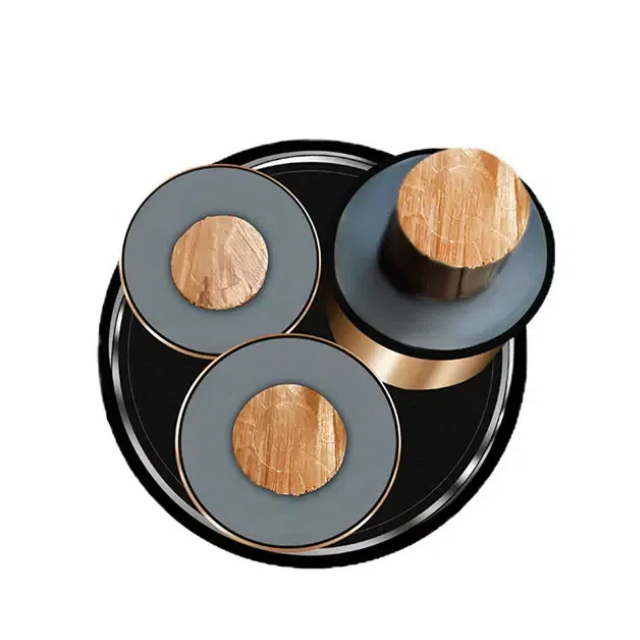
One critical factor is cable screening. Properly screened MV cables confine electric fields within the conductor insulation and shield, reducing electromagnetic coupling to nearby signal cables. At Far East Cables, our medium-voltage products feature XLPE insulation combined with copper wire screens or metallic tape, providing robust protection against leakage currents.
Earthing and bonding practices also play a central role. Effective grounding of MV shields at both ends eliminates induced voltages, while single-point grounding may be necessary in some sensitive installations to reduce circulating currents.
Route separation is another design consideration. Industry guidelines recommend at least 300 mm of physical space between MV power cables and control wiring, or placing them in separate metallic conduits. Using steel wire or tape armor on medium-voltage mining cables adds a further barrier against interference, while also protecting against mechanical impact in rugged underground environments.
By selecting MV cables with optimized screening and armoring, and following best-practice routing, engineers can significantly reduce risks to automation and control performance.
Testing, Monitoring, and Maintenance for MV-Backed Control Systems
Even the best-designed cable system requires continuous verification to ensure long-term reliability. Medium-voltage mining cables should be regularly tested and monitored, not only for their own performance but also for their effect on nearby control systems.
Partial discharge testing is one of the most effective diagnostic tools. It identifies insulation weaknesses before they evolve into failures that could disrupt both power and control networks. Thermal imaging or thermography is another valuable technique, revealing hotspots caused by loose connections or overloads that may radiate interference into adjacent systems.
Online condition monitoring has become increasingly important in automated mines. Sensors embedded within MV switchgear can provide real-time data on voltage fluctuations, harmonics, and cable health. By correlating this information with SCADA logs, engineers can spot patterns of interference and take corrective action before downtime occurs.
Routine inspections should also include verification of shielding continuity, grounding connections, and the physical separation of cable routes. In environments where mining cables are subject to constant movement or abrasion, ensuring the integrity of armoring and conduit systems is critical for protecting both power and control functions.
How Far East Products and Services Reduce Signal and Control Downtime
At Far East Cables, we design medium-voltage mining cables that not only deliver power reliably but also safeguard the sensitive control systems operating alongside them. Our MV products feature XLPE insulation with excellent dielectric strength, combined with copper or aluminum conductors for optimal performance. Screening and metallic armor options provide both electromagnetic shielding and mechanical durability in harsh underground settings.
All cables undergo factory acceptance testing, including electrical, thermal, and mechanical verification, to ensure compliance with IEC 60502 and IEEE standards. For projects involving SCADA and automation, we offer technical support on cable selection, shielding strategies, and installation practices tailored to mining conditions.
Our engineers work closely with automation and maintenance teams to recommend the right combinations of MV power and dedicated control cables, ensuring both systems operate harmoniously. With these solutions, operators reduce the risk of downtime caused by EMI, grounding issues, or premature insulation failure.
Conclusion
Medium-voltage mining cables are indispensable for powering substations, motor control centers, and large equipment, but they are not a substitute for dedicated signal and control wiring. Instead, their correct specification and installation directly influence the reliability of automation and monitoring systems operating nearby. By choosing MV cables with proper screening, insulation, and mechanical protection—such as those manufactured by Far East Cables—mines can ensure uninterrupted signaling and safe control operations. If you are planning or upgrading your mining infrastructure, contact us today to request a compatibility review or to learn more about our complete range of mining cable solutions.


