In modern mining operations, the efficiency of moving equipment is directly tied to the durability and adaptability of its electrical infrastructure. A mining cable is not only about delivering power—it must withstand constant bending, pulling, and reeling as equipment moves. This is where the flexible mining cable proves essential. Far East Cables has developed solutions that ensure dynamic equipment like hoists, shuttle cars, winches, and conveyors operate reliably with reduced downtime. In this article, we will explore what makes a cable flexible in mining applications, highlight its role in transport and hoisting systems, provide guidance on selecting the right option, and share lifecycle tips to maximize performance.
What Makes a Cable “Flexible” in Mining Contexts?
Flexibility in mining cables is not a casual descriptor but a technical attribute carefully engineered into the design. Unlike standard fixed installation cables, flexible mining cables must handle repetitive bending and reeling cycles without internal breakdown.
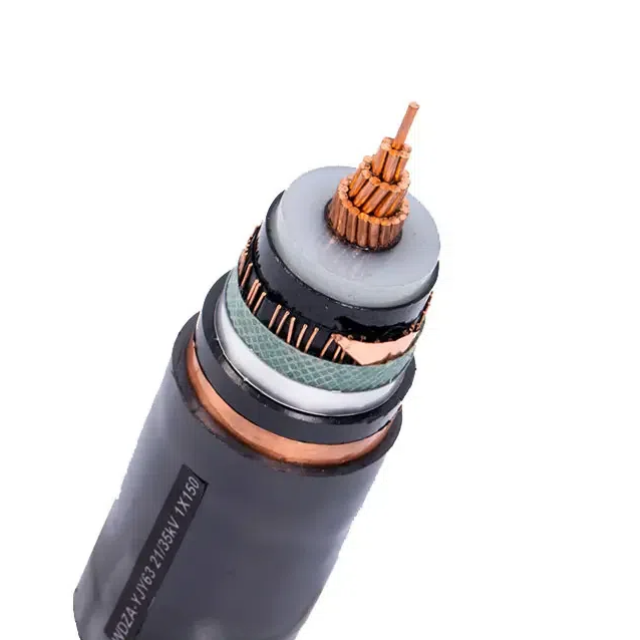
The most critical element is the conductor construction. Instead of solid wires, these cables use fine-stranded copper conductors. The large number of thin strands makes the core pliant and able to move with reduced mechanical stress. This design significantly extends reel life and prevents premature conductor fatigue.
Equally important is the insulation and outer sheath. Flexible mining cables typically employ pliant materials that resist cracking while bending. Elastomers such as neoprene, CPE, or PUR provide abrasion resistance, oil resistance, and adaptability to extreme temperatures. These materials allow the sheath to flex without tearing, even when dragged across sharp rocks or reeled thousands of times.
Industry standards play a major role in validating flexibility. Cables undergo specific tests for flex cycles, abrasion resistance, and tensile strength. A product that passes high-cycle reeling simulations can be trusted in demanding applications where equipment may reel and unreel cables hundreds of times each shift. At Far East Cables, strict testing protocols ensure that our mining cable designs consistently meet these flex-life expectations.
Primary Use Cases in Transport & Hoisting Systems
Flexible mining cables are designed with a clear purpose: to keep dynamic mining equipment powered without interruption. Their primary applications focus on equipment that is constantly in motion.
One of the most visible uses is in hoisting systems. Hoists and winches rely on power cables that reel in and out as loads move vertically. Without a flexible cable, insulation cracks and conductor breaks would quickly occur, bringing production to a halt. Flexible mining cables ensure continuous power to motors while enduring the mechanical stress of vertical reeling.
Shuttle cars and mobile transport units are another common scenario. These vehicles drag their power cables across the mine floor, subjecting them to abrasion, oil, water, and sharp edges. A cable engineered for flexibility and toughness prevents failures that otherwise would require frequent replacement.
Conveyors, which often extend over long distances and require trailing cables, also benefit. When conveyors adjust position or when portable conveyor sections are relocated, cables must be able to flex and withstand repeated movement. Flexible mining cables provide the endurance needed for these situations.
In each case, whether it is reeling, dragging, or trailing, the common thread is that these cables must perform reliably under conditions where a rigid or standard cable would quickly fail.
Selection Criteria for Dynamic Applications
Choosing the right mining cable for hoisting and transport requires more than simply specifying voltage and length. Engineers and purchasers should carefully evaluate several key criteria that influence long-term reliability.
Bend radius is one of the first factors. A cable should have a minimum bending radius small enough to accommodate the equipment’s reel or pulley dimensions without straining conductors. This ensures smooth operation and reduces the risk of kinking.
Tensile strength is equally critical. As a cable is reeled in, it experiences pulling forces that can stretch the conductors or damage the sheath. Flexible mining cables are designed with reinforcement layers that distribute tension, maintaining conductor integrity.
Abrasion resistance cannot be overlooked, especially in shuttle cars or floor-dragging applications. A rugged outer jacket—whether neoprene, CPE, or polyurethane (PUR)—is chosen depending on whether the environment involves oils, chemicals, moisture, or sharp debris. Each material offers unique strengths: neoprene provides broad chemical resistance, CPE balances cost with durability, and PUR excels in abrasion and cut resistance.
Water and oil resistance also play a role, particularly in underground mines where moisture and hydrocarbon exposure are common. A flexible mining cable that resists swelling or degradation in such conditions will deliver a longer service life.
By carefully matching these properties to the intended environment, operators can ensure optimal performance and reduce the risk of unexpected downtime.
Installation & Lifecycle Tips for Flexible Cables
Even the best-engineered mining cable can fail prematurely if installation and maintenance practices are overlooked. To achieve full value from flexible cables, several guidelines should be followed.
First, reel sizing must match the cable’s bend radius requirements. Using undersized reels forces excessive bending that accelerates fatigue. Far East Cables provides technical data sheets that specify the minimum reel dimensions appropriate for each product.
Avoiding kinks during installation is also essential. A kinked cable weakens the conductor strands and creates a point of future failure. During deployment, cables should be carefully laid out and tension controlled.
A recommended spare policy helps maintain continuity of operations. Mines that stock ready-to-use spare flexible cables can replace a damaged unit quickly, avoiding extended downtime.
Regular inspection intervals are another key practice. Cables should be checked for sheath wear, flattening, or conductor exposure. Minor surface abrasion can often be managed, but deeper cuts or exposed conductors require immediate replacement to ensure safety.
By adopting these lifecycle practices, operators can extend reel life, maximize return on investment, and ensure safe, reliable operation.
Product Differentiation & Specification Templates
In a crowded market of cable suppliers, it is important to identify what makes one product superior to another. For flexible mining cables, differentiation often comes down to additional protective features and customization options.
For example, Far East Cables offers enhanced abrasion layers that provide extra protection in shuttle car applications where dragging forces are highest. These reinforced sheaths extend cable service life, reducing replacement frequency.
Custom lengths and connector options are another advantage. Instead of forcing mines to adapt to standard lengths, flexible mining cables can be supplied in exact sizes to reduce waste and simplify installation.
Specification templates are also a valuable resource for engineers and purchasers. By following a checklist that includes voltage rating, conductor size, bend radius, sheath material, tensile strength, and environmental resistance, decision-makers can ensure they specify the right product for the intended application. Far East Cables provides downloadable spec guides to help streamline this process and ensure no critical factor is overlooked.
With these differentiation features, flexible mining cables become more than just a commodity—they become a tailored solution aligned with operational demands.
Conclusion
The role of a mining cable in hoisting and transport is far greater than simply transmitting electricity. For equipment that is constantly moving, a flexible mining cable ensures durability, safety, and consistent performance. Far East Cables takes pride in designing products that withstand rigorous flex cycles, endure harsh underground conditions, and deliver extended reel life. By choosing the right cable and following proper installation and maintenance practices, mining operations can significantly reduce downtime and improve efficiency. To learn more or to request a quotation or sample for your next project, please contact us today.


