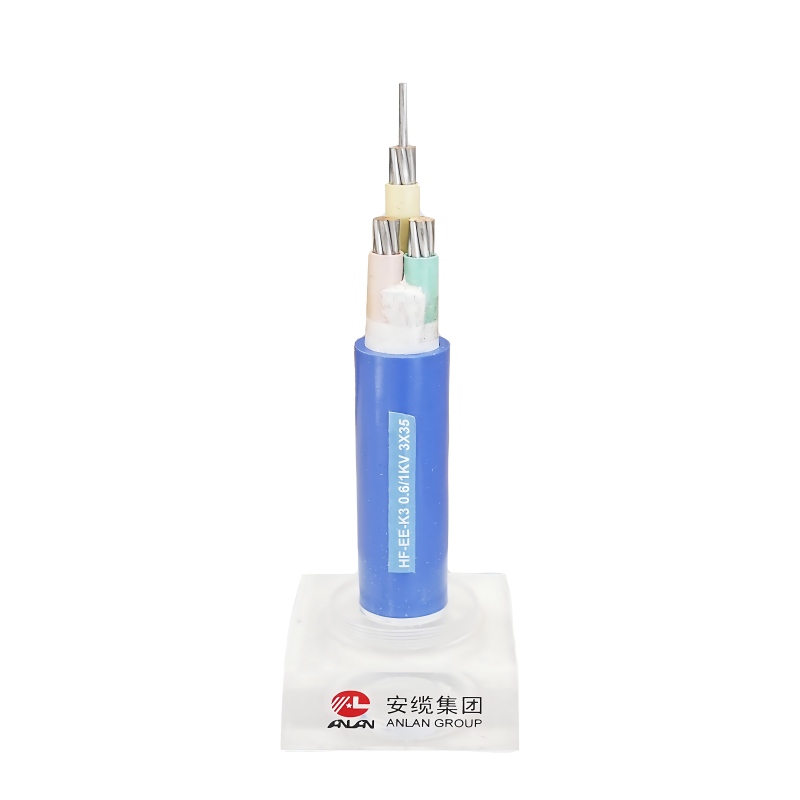
In nuclear facility operations, cable degradation is not a maintenance inconvenience; it is a critical regulatory and safety vulnerability. A single undetected fault can cascade into severe operational hazards during an emergency. Upgrading, maintaining, or commissioning facility infrastructure requires navigating a rigid matrix of compliance. You must strictly adhere to frameworks ranging from ASME NQA-1 to IEEE Class 1E. These stringent standards ensure vital electrical components survive catastrophic conditions without compromising plant integrity.
This guide deconstructs the essential evaluation frameworks, testing methodologies, and standardizations required to validate nuclear-grade cables. We examine the core metrics for extreme environments, accelerated aging, and long-term operations. Ultimately, this information helps engineering and procurement teams make defensively sound vendor and material decisions to protect both public safety and operational continuity.
Key Takeaways
Nuclear Cable Testing is governed by strict Quality Assurance (QA) frameworks (e.g., ASME NQA-1, 10 CFR 50 Appendix B) that dictate every phase of validation and traceability.
Procuring a true Safety Cable requires verified performance data under both normal aging conditions and simulated Design Basis Events (DBEs), including Loss of Coolant Accidents (LOCA).
Evaluating a testing partner or manufacturer hinges on their demonstrable capability to execute combined-environment testing for Radiation Resistant Cable and Fire Resistant Cable specifications without compromising auditability.
Proactive Long-Term Operation (LTO) testing strategies significantly reduce the risk of NRC (or regional regulatory) citations and unplanned operational downtime.
The Business and Operational Impact of Defensible Cable Qualification
Operating a nuclear power generating station requires extreme risk mitigation. The steep cost of non-compliance goes far beyond basic component replacement. If a facility fails an NRC audit due to undocumented cable degradation, the consequences include massive regulatory fines and delayed plant restarts. Furthermore, compromised containment integrity during a thermal or radiation event poses an unacceptable safety risk to personnel and the public. You cannot afford ambiguity in your compliance data.
The ultimate success criteria for any facility upgrade involves achieving demonstrable, audit-ready qualification. This documentation proves a Safety Cable will perform its precise electrical function before, during, and after a Design Basis Event (DBE). Regulators demand hard evidence. They require verifiable proof tracing the material's performance back to certified baseline metrics.
Implementation realities often reveal a frustrating gap between a theoretical cable lifespan and actual environmental degradation. Engineers frequently design systems assuming optimal ambient conditions. However, installations face severe real-world challenges. Moisture ingress, thermal hot spots, and mechanical stress during installation drastically reduce polymer lifespan. Facility managers must account for these localized aging stressors.
Because of these operational harsh realities, relying on basic commercial testing is insufficient. Facilities must baseline their operational risk against official historical failure data. Reviewing documents like DOE Facility Bulletins or DNFSB reports highlights past industry failures. You can use this failure data to justify rigorous testing investments and defend procurement budgets to stakeholders.
Core Quality Standards: Navigating NQA-1, Class 1E, and NRC Guidelines
Understanding the regulatory landscape is the first step toward secure procurement. You must distinguish between standard commercial guidelines and the absolute mandates of nuclear safety. Strict adherence to these frameworks guarantees component traceability.
ASME NQA-1 & 10 CFR 50 App B
These two documents form the foundational quality assurance requirements for the nuclear sector. ASME NQA-1 dictates the rigorous controls required for nuclear facility applications. Meanwhile, 10 CFR 50 Appendix B serves as the federal legal mandate for quality assurance. A testing facility's internal QA program is just as critical as the physical tests they perform. If a laboratory cannot prove strict calibration control and document retention, their physical test results hold no regulatory value.
IEEE 383 & Class 1E Requirements
IEEE 383 establishes the baseline for qualifying Class 1E electric cables and field splices. Class 1E refers to the safety classification of the electrical equipment essential to emergency reactor shutdown, containment isolation, and reactor core cooling. This standard dictates how manufacturers must sequence accelerated aging, radiation exposure, and LOCA simulations to prove survivability.
EN IEC 62465 & EPRI LTO Guidelines
As legacy plants seek life extensions, aging management becomes a primary focus. EN IEC 62465 and EPRI guidelines specifically address condition monitoring for Long-Term Operation (LTO) strategies. They provide the frameworks necessary for predicting remaining useful life without destroying the installed infrastructure.
Trust & Transparency Check
Engineering teams must delineate the difference between a vendor claiming "compliance with" versus holding verified "certification" for these standards. A vendor might claim their product aligns with NQA-1 principles. However, unless an authorized third party formally audits and accredits their QA program, you assume massive regulatory risk.
Mandates strict document control and lab calibration audits.
IEEE 383 (Class 1E)
Qualification Testing Sequence
Defines aging, radiation, and LOCA simulation parameters.
EPRI LTO Guidelines
Aging Management
Provides metrics for extending cable life beyond initial design.
Essential Methodologies for Nuclear Cable Testing
Comprehensive Nuclear Cable Testing requires sequentially simulating decades of wear followed by a catastrophic event. Vendors must replicate these environments flawlessly in a controlled laboratory setting.
Evaluating Radiation Resistant Cable
Nuclear environments subject polymers to constant gamma and neutron bombardment. Procuring a dependable Radiation Resistant Cable requires rigorous Total Integrated Dose (TID) mapping. Laboratories utilize cobalt-60 sources to simulate gamma radiation exposure. They calculate the exact dose the cable will absorb over a 40-year or 60-year lifespan. Post-exposure, technicians evaluate polymer degradation and structural embrittlement. They measure tensile strength and perform voltage withstand tests to ensure dielectric strength loss remains within acceptable safety margins.
Evaluating Fire Resistant Cable
Fire hazards in containment areas require specialized material formulations. When qualifying a Fire Resistant Cable, laboratories conduct severe flame spread, smoke emission, and circuit integrity testing. They incorporate strict commercial and industrial standards like UL 2556 and IEEE 1202. However, they perform these tests on artificially aged samples to simulate a fire occurring late in the plant's life. Furthermore, toxicity and halogen-free material validation are crucial. Halogenated materials release corrosive gases during combustion, which can severely damage surrounding sensitive electronics.
Environmental & LOCA Simulation
The most demanding phase of testing simulates a Loss of Coolant Accident (LOCA). This simulation typically follows specific phases:
Accelerated Thermal Aging: Technicians use the Arrhenius methodology to calculate activation energy. They place cables in high-temperature ovens for months, simulating 40 years of continuous thermal degradation.
LOCA Chamber Exposure: Technicians place the aged cables inside pressure vessels. They blast the components with high-temperature, high-pressure steam profiles mimicking a reactor pipe rupture.
Chemical Spray: During the steam exposure, the chamber introduces boric acid and sodium hydroxide. This simulates the aggressive chemical sprays used in containment buildings to suppress radioactive iodine.
Submergence Testing: Finally, engineers submerge the cables in water to simulate post-LOCA extended operation. They then run operating voltage through the circuits to verify electrical integrity.
Cable Aging Management and Long-Term Operation (LTO)
Many global nuclear facilities are approaching or exceeding their original 40-year design lifespans. Extending these operating licenses requires aggressive aging management programs.
Operational Constraints
Testing legacy cables already deployed in operating plants poses severe logistical challenges. You cannot simply remove miles of installed cable for destructive laboratory testing. Facility managers need methods to test and monitor these assets in situ without causing destructive disruption or extending outage windows unnecessarily.
Condition-Based Monitoring (CBM)
To solve this, the industry relies on non-destructive testing (NDT) techniques. These methods form the backbone of Condition-Based Monitoring (CBM) programs:
Time Domain Reflectometry (TDR): This sends a high-frequency pulse down the conductor. It measures reflections caused by impedance changes, helping locate splices, water trees, or severe jacket damage.
Line Resonance Analysis (LIRA): LIRA analyzes the complex electrical resonance of the circuit. It is highly effective at identifying localized thermal hot spots that TDR might miss.
Indenter Polymer Testing: Technicians use a specialized clamp to physically press against the cable jacket. It measures the material's compressive modulus. As polymers age and oxidize, they harden. Indenter testing provides measurable data on this embrittlement.
Data to Outcomes
Collecting diagnostic data is only the first phase. Engineers must translate condition data into predictive remaining useful life (RUL) models. By comparing field data against baseline accelerated aging curves, plants can accurately predict when a cable will fail a DBE. This quantitative approach satisfies regulatory requirements for plant life extension applications.
Vendor Evaluation Matrix: Shortlisting a Cable Qualification Partner
Your compliance strategy is only as strong as your testing partner. Procurement teams must scrutinize vendors rigorously to prevent downstream audit failures.
Accreditation Verification
Do not accept verbal assurances. A reliable vendor must possess current ISO/IEC 17025 accreditation specific to the tests they perform. Furthermore, this accreditation must operate under a strictly audited NQA-1 quality program. You must review their actual certificates and verify the scope of their accredited capabilities.
Facility Scalability & Capabilities
Assess the physical infrastructure of the testing laboratory. Do they have in-house LOCA chambers and radiation testing capabilities? Many smaller labs subcontract these severe environment tests to third parties. Subcontracting dramatically increases QA risk because it fragments the chain of custody. Prioritize partners who execute the entire sequential test plan under one roof.
Reporting & Traceability
The final deliverable of any test program is the documentation. The requirement for unassailable reporting cannot be overstated. Test reports must stand up to rigorous NRC or third-party audits five, ten, or twenty years after the test is completed. Reports must detail equipment calibration records, personnel qualifications, and exact anomaly resolutions.
Next-Step Action
To safely onboard a new testing laboratory or manufacturer, follow these steps:
Request a formal review of the vendor's QA manual and latest audit findings.
Interview their lead quality engineers to assess their grasp of Class 1E nuances.
Initiate a pilot test protocol for a specific custom or specialty cable assembly before committing to a massive fleet-wide qualification program.
Verify their anomaly reporting procedures. You need to know exactly how they document and resolve unexpected failures during the testing sequence.
Conclusion
Validating cables for nuclear applications is an exercise in extreme risk mitigation. Regulatory bodies do not tolerate guesswork or commercial assumptions. Shortcuts in testing standards inevitably lead to outsized regulatory penalties, compromised containment systems, and catastrophic operational costs.
Prioritize vendors and manufacturers who treat quality assurance, aging management, and DBE simulation as transparent, verifiable sciences. They should view IEEE and NQA-1 standards as baseline requirements rather than standard commercial hurdles. By demanding rigorous environmental simulations and precise traceability, you protect the facility's long-term operational license.
Start evaluating your current infrastructure today. Direct your engineering teams to download a specific compliance checklist, request a technical consultation with an accredited laboratory, or view a sample Class 1E qualification report to establish a secure baseline for your next procurement cycle.
FAQ
Q: What is the difference between commercial-grade cable and nuclear Class 1E cable?
A: Commercial cables focus on standard electrical performance under normal ambient conditions. A nuclear Class 1E cable requires exhaustive qualification documentation proving it can survive a Design Basis Event (DBE). This includes sequential exposure to artificial thermal aging, high-dose gamma radiation, and severe LOCA steam and chemical spray environments without losing electrical integrity.
Q: How long does a full IEEE 383 qualification test program take?
A: A complete IEEE 383 qualification is a sequential process that typically takes several months. Accelerated thermal aging alone often requires 30 to 90 days in an oven to simulate a 40-year lifespan. Radiation exposure, LOCA chamber testing, submergence, and final reporting usually extend the full timeline to six or eight months.
Q: Can standard fire testing (like UL 2556) satisfy nuclear safety requirements?
A: No, standard commercial fire testing is insufficient on its own. While tests like UL 2556 evaluate flame spread, nuclear qualification mandates that these fire tests be performed on artificially aged samples. Evaluating an aged polymer ensures the material retains its fire-resistant properties at the end of its service life.
Q: How do facilities handle testing for obsolete or legacy cables?
A: Facilities often utilize Commercial Grade Dedication (CGD) to qualify modern equivalents for legacy systems. For installed cables, plants rely on specialized EPRI-guided condition monitoring. Techniques like Time Domain Reflectometry (TDR) and indenter testing allow engineers to assess degradation without physically removing the obsolete cables from the plant.