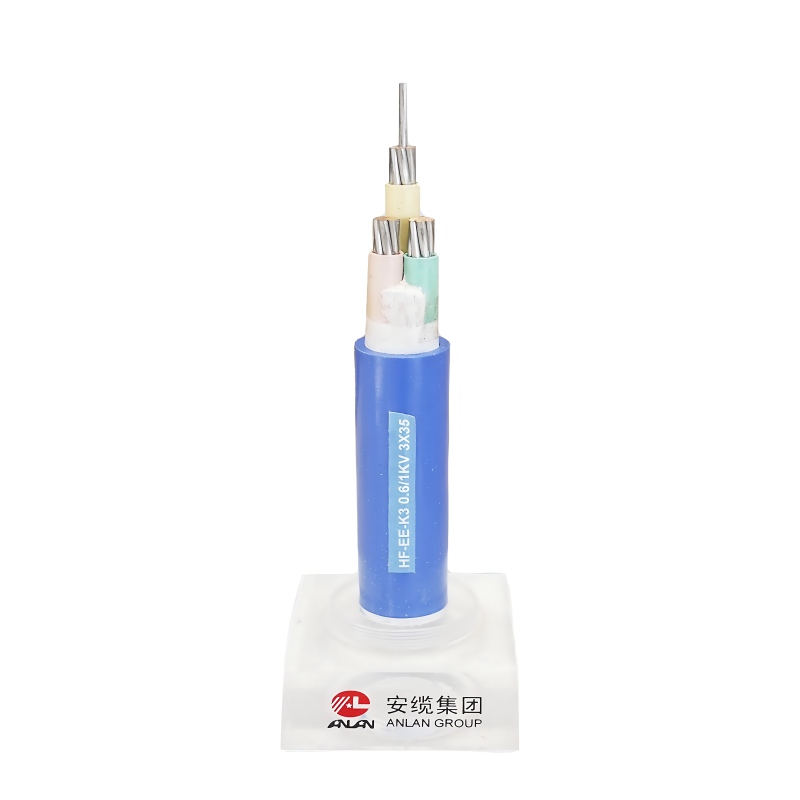
Unplanned outages in nuclear facilities carry severe operational penalties. Failed safety audits risk even harsher regulatory action. Inside these power plants, a highly complex operational environment exists. Constant baseline conditions, particularly ambient heat and background radiation, actively accelerate polymer degradation. This material breakdown directly threatens the functionality of critical safety systems over time. Understanding these degradation pathways is no longer just a theoretical exercise. It is a strict compliance mandate for every operator.
We created this guide to offer an evidence-based framework for evaluating nuclear cable aging. Plant engineers, compliance officers, and procurement teams will learn to understand specific testing limitations. You will also discover how to evaluate and shortlist resilient solutions. By applying these core principles, you can confidently support safe plant life extensions or specify robust components for advanced new builds.
Key Takeaways
Synergistic Degradation: Simultaneous exposure to heat and radiation degrades cable insulation faster and differently than sequential exposure, requiring conservative safety margins.
Material Selection Matters: Specifying the correct baseline materials (e.g., XLPE, EPR) directly dictates long-term performance, failure predictability, and Design Basis Event (DBE) survivability.
Proactive Compliance: Effective Aging Management Programs (AMPs) rely on verifiable baseline testing, condition monitoring (like Elongation at Break), and adherence to strict NRC/EPRI acceptance criteria.
Holistic Specification: Modern procurement must evaluate cables not just for radiation tolerance, but as integrated systems requiring high-temperature, fire-resistant, and corrosion-resistant properties.
The Mechanics of Nuclear Cable Aging: Thermal and Radiation Synergies
Polymers form the backbone of modern electrical insulation. In a nuclear environment, they face intense physical breakdown. This breakdown takes two primary forms. The first mechanism is chain scission. The second mechanism is cross-linking. Chain scission cuts the polymer molecules into smaller fragments. This makes the material soft and mechanically weak. Cross-linking forces independent polymer chains to bond tightly together. This creates an overly rigid, inflexible structure. Both mechanisms occur simultaneously in primary containment and safety-related zones. They drastically alter the baseline performance of the infrastructure.
Chronic high ambient temperatures drive thermal aging. These elevated temperatures constantly deplete the protective antioxidants blended inside the polymer mix. Once the antioxidants vanish, the insulation suffers severe oxidation. It quickly becomes dangerously brittle. You must also account for localized hot spots during your safety calculations. These extreme temperature areas sit near steam lines, uninsulated valves, or poorly ventilated wall penetrations. Hot spots accelerate degradation far beyond standard modeled baselines. They represent a hidden failure risk for facility managers.
Radiation aging adds another severe layer of environmental stress. Gamma and beta radiation constantly bombard the cable routes. High-energy particles penetrate deeply to alter the molecular structure of insulation and jacketing materials. This intense bombardment knocks electrons out of their orbits. It creates highly reactive free radicals. As a result, the material loses its mechanical flexibility rapidly. Over extended timeframes, electrical resistance also drops to unsafe levels.
Heat and radiation do not act independently. They act synergistically. This means they operate as compounding variables. Combined exposure creates a highly non-linear degradation curve. You cannot simply add the thermal damage to the radiation damage to find a total wear factor. The synergistic effect makes service life predictions extremely complex. Engineers must apply significant safety margins to account for these interacting forces.
Evaluation Criteria for Nuclear Safety Cable Materials
Selecting the right materials directly dictates long-term reliability. We generally categorize industry-standard solutions by their base polymers. The most common choices include Cross-linked Polyethylene (XLPE), Ethylene Propylene Rubber (EPR), and Chlorosulfonated Polyethylene (CSPE). Each material behaves differently under continuous operational stress. XLPE offers excellent electrical properties and strong radiation resistance. EPR provides superior physical flexibility and exceptional thermal stability. CSPE usually serves as a rugged outer jacket. It heavily resists physical damage and environmental chemical attacks.
Industry-Standard Cable Material Comparison
Material Type
Primary Application
Key Advantages
Vulnerability
Cross-linked Polyethylene (XLPE)
Core Insulation
High dielectric strength, strong radiation tolerance
Can become highly rigid after severe thermal aging
Ethylene Propylene Rubber (EPR)
Core Insulation
Excellent flexibility, handles thermal spikes well
Slightly lower baseline dielectric strength than XLPE
Chlorosulfonated Polyethylene (CSPE)
Outer Jacketing
Rugged physical defense, resists oil and chemicals
Prone to surface cracking under extreme UV/radiation
When evaluating these materials, mechanical metrics matter far more than electrical metrics. You might assume electrical testing predicts failure first. However, mechanical degradation is always the primary leading indicator of end-of-life. We track this physical decay using Elongation at Break (EAB) or indenter modulus testing. Insulation usually becomes critically brittle long before its electrical properties degrade. If the material cracks, electrical failure immediately follows.
High-temperature tolerance is another mandatory evaluation criterion. Containment environments regularly experience elevated heat limits. You must specify a high-temperature cable capable of withstanding baseline operational heat. You must also account for the poorly understood inverse temperature effect. In certain polymer blends, moderate temperatures combined with low-dose radiation cause faster degradation than highly accelerated testing conditions. This phenomenon makes precise material selection absolutely vital.
Finally, you must evaluate survivability during a Design Basis Event (DBE). A true nuclear safety cable must remain fully functional during and after a Loss of Coolant Accident (LOCA). It must survive extreme steam pressure, chemical sprays, and intense heat spikes without short-circuiting. Furthermore, you must integrate proper jacketing to ensure fire survivability. Using a certified fire-resistant cable ensures full compliance with IEEE 383 or equivalent global fire propagation standards.
Testing Methodologies: Navigating Assumptions and Realities
Vendors often present impressive laboratory aging models to secure contracts. However, decision-makers must scrutinize these technical claims carefully. You need to contrast sterile lab data with harsh operational realities. Evaluating the trustworthiness of environmental qualification (EQ) data requires deep technical insight. Real-world conditions rarely mirror clean laboratory environments perfectly. You must understand the underlying testing assumptions.
Testing methodologies usually fall into two major categories. These are sequential testing and simultaneous testing. The traditional model heavily relies on sequential testing. Technicians apply intense thermal aging first. They follow it up with massive radiation aging. This sequential method is much easier to perform. It aligns with older Arrhenius equation models. However, it carries significant engineering limitations. It fails to replicate real-world physics accurately. It entirely ignores the compounding nature of simultaneous reactor stressors.
Simultaneous testing exposes the sample to heat and radiation at the exact same time. This approach closely mimics the true containment environment. It provides a much more accurate and conservative safety margin baseline. Simultaneous testing is inherently more complex and expensive to execute. Yet, it yields highly reliable degradation curves. It captures the true synergistic effects happening daily inside the active reactor environment.
You must also recognize the severe risks of accelerated aging. Laboratories often use extreme heat and massive radiation doses to simulate 40 years of wear in just a few weeks. We warn strongly against over-reliance on these highly accelerated short-term tests. Extreme acceleration can trigger unnatural failure mechanisms. These mechanisms would never actually occur at normal operational dose rates. You should always demand data models backed by historical, real-world reactor deployment data. This historical check ensures your safety margins remain firmly grounded in reality.
Mitigating Environmental Risks Beyond Heat and Radiation
Heat and radiation command the most attention during safety audits. However, secondary degradation factors also actively threaten infrastructure integrity. Reactor containments hold numerous environmental hazards. Moisture presents a constant, pervasive challenge. Chemical sprays, specifically borated water used during safety injections in Pressurized Water Reactors (PWRs), introduce aggressive corrosive agents. Ambient humidity also fluctuates significantly during standard maintenance cycles.
Corrosion and chemical resistance play a vital role in long-term reliability. Plant life extensions push operational timelines to 60 or even 80 years. To survive this extreme duration, you must specify a highly durable corrosion-resistant cable. Without adequate chemical defense, the metallic shield integrity degrades rapidly. The internal copper conductors can also suffer severe oxidation. This chemical breakdown permanently compromises the entire electrical circuit.
Mechanical stressors represent another critical risk category that operators overlook. Aged cables become highly embrittled over the decades. They lose their original flexibility and elasticity. Routine plant operations introduce constant mechanical vibration. Maintenance personnel may accidentally handle, step on, or bend brittle wiring during routine inspections. Furthermore, cable tray crowding exerts continuous physical pressure on the outer jackets. A heavily crowded tray severely reduces airflow. This traps heat and exacerbates the physical stress on the aging polymers below.
Condition Monitoring and Strategic Procurement
Proper component specification solves only half the problem. You must also implement ongoing evaluation strategies. We strongly guide facilities in integrating new procurement cycles with an existing Aging Management Program (AMP). An effective AMP tracks equipment health proactively over decades. It ensures safety margins remain robust throughout the entire plant lifecycle. It transforms passive maintenance into active risk mitigation.
You should adopt practical, non-destructive evaluation (NDE) methods. These in-situ monitoring techniques allow you to track aging in real time without destroying the operational samples. Two highly effective diagnostic methods currently exist. Time Domain Reflectometry (TDR) locates specific localized faults or hot spots along the physical run. Frequency Domain Reflectometry (FDR) offers a broader assessment of the overall insulation condition. These diagnostic tools provide highly actionable data for predictive maintenance scheduling.
Strategic procurement requires rigorous vendor vetting. Use a structured shortlisting logic when selecting your manufacturing partners. We recommend utilizing the following evaluation checklist:
Verify Quality Assurance Frameworks: Do they possess a verifiable 10 CFR 50 Appendix B Quality Assurance program? This strict certification guarantees uncompromising manufacturing controls and traceability.
Require Transparent Documentation: Demand full access to environmental qualification (EQ) test reports. The vendor must prove their marketing claims with raw, unedited test data.
Assess Long-Term Engineering Capacity: Evaluate the vendor's ability to provide long-term technical support. They should also offer custom material formulation capabilities for highly specific plant life extension projects.
Conclusion
Managing service life requires moving well beyond basic compliance checklists. You must understand the highly nuanced physical realities of synergistic aging. Heat, radiation, moisture, and mechanical stress interact continuously. They create complex, non-linear degradation pathways. By acknowledging these engineering realities, you can build a substantially more resilient safety infrastructure.
We encourage plant engineers and procurement managers to take proactive steps today. First, audit your current EQ data thoroughly for any historical gaps. Second, evaluate your facility's condition monitoring capabilities and upgrade to modern NDE tools. Finally, consult with specialized manufacturers to bridge any discovered safety gaps. Upgrading your monitoring tools and partnering with strictly qualified vendors will ultimately secure your long-term operational future.
FAQ
Q: What is the typical qualified service life of a nuclear safety cable?
A: The standard baseline qualification typically covers 40 years of continuous service. However, many facilities now pursue plant life extension (PLEX) programs. These initiatives aim to push operational limits to 60 or even 80 years. Achieving this requires highly rigorous accelerated aging tests and historical data validation to prove the insulation can safely survive the extended timeline without failing.
Q: How does the inverse temperature effect impact cable insulation?
A: The inverse temperature effect is a unique physical phenomenon affecting certain polymers. Under this condition, materials actually degrade more rapidly at moderately elevated temperatures combined with low dose-rate radiation. This heavily contrasts with highly accelerated testing parameters, where extreme heat might mask the true degradation curve. It highlights the danger of relying solely on short-term lab simulations.
Q: Why is Elongation at Break (EAB) the standard metric for cable aging?
A: Physical embrittlement dictates a cable's true end-of-life limit. As insulation loses its flexibility, it becomes highly prone to cracking under the severe mechanical stress of a Design Basis Event. This physical failure inevitably leads to direct electrical failure. EAB provides a highly reliable, quantifiable threshold. An absolute EAB limit of 50% generally serves as the industry standard replacement trigger.