In underground operations, reliable lighting and ventilation systems are the backbone of both safety and productivity. A mining cable must deliver consistent power in harsh conditions, and for larger circuits, high voltage is often the preferred choice. At Far East Cables, we provide solutions designed for these demanding environments, helping mines reduce downtime while ensuring stable performance. This article explores how high voltage mining cable supports lighting and ventilation systems, what technical features to look for, and how to install them effectively.
Why use high-voltage cables for lighting and ventilation in mines?
Lighting and ventilation are unique loads in underground networks. Unlike localized equipment such as pumps or drills, these systems often require long distribution runs, feeding multiple sections of a mine simultaneously. Using high-voltage mining cables allows operators to transmit power more efficiently over these long distances.
One of the key advantages is reduced line loss. Lower-voltage feeders can suffer significant voltage drop, which impacts lamp brightness and the effectiveness of ventilation fans. By adopting HV circuits, fewer feeder lines are needed, which simplifies network design and minimizes the number of joints and terminations underground. This translates directly into less maintenance work and higher reliability.
Typical ranges for HV mining cable vary depending on the scale of the mine and local regulations, but distribution voltages in the 6kV–36kV range are common. At these levels, a single HV circuit can power multiple ventilation fans spread across kilometers of tunnels, or large lighting sections with hundreds of fixtures. This scalability is why many electrical planners and ventilation engineers prefer HV options for critical systems.
Technical features important for lighting and ventilation circuits
When selecting a mining cable for lighting or ventilation, not all HV options are created equal. Several technical parameters make a direct impact on safety, performance, and long-term durability.
Conductor sizing
Adequate conductor cross-sectional area ensures the circuit can handle both normal and peak current demands without overheating. Ventilation fans, in particular, can have high inrush currents during startup. Oversized conductors may add cost, but undersizing poses risks of overheating and premature insulation damage.
Insulation designed for underground conditions
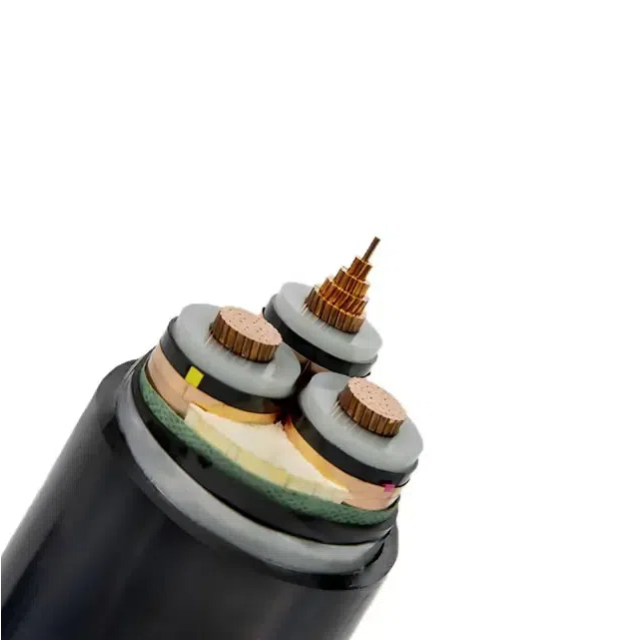
Moisture, dust, and chemical exposure are constants in mining. XLPE insulation with additional moisture barriers helps prevent partial discharge and maintains dielectric strength even in damp environments. Choosing a cable that resists both high temperature and humidity is essential for ventilation runs that pass through warm, moisture-laden shafts.
Mechanical protection
Cables running along tunnel walls or through shafts face abrasion, vibration, and sometimes accidental impact from equipment. Armor layers such as steel tape or steel wire provide essential protection against mechanical stress. For lighting and ventilation circuits, which are often routed in accessible areas, robust outer sheathing ensures longer service life.
Voltage drop and transformer placement
Even with HV systems, careful planning of transformer placement is critical. A well-placed transformer can reduce feeder length, minimizing voltage drop for end loads like lamps or fan motors. Electrical planners often use simulation tools to determine the optimal layout, but selecting HV mining cable with low resistance characteristics provides an added safeguard.
Safety and system integration
Beyond performance, safety and integration with mine control systems are decisive factors. Lighting and ventilation are not stand-alone circuits—they interact with emergency protocols and monitoring systems that keep workers safe.
Integration with automatic ventilation controls
Modern mines rely on automated control of airflow to optimize energy use and maintain air quality. HV mining cables must interface seamlessly with these systems, delivering reliable power to variable-speed drives and control panels. Consistency of supply ensures that fans can adjust output instantly when sensors detect gas or dust levels.
Emergency lighting circuits
Lighting is not only a matter of visibility; in emergencies, it guides evacuation. HV-fed circuits often supply critical zones through step-down transformers that power emergency lamps and signage. Cables designed with fire-resistant properties and flame-retardant jackets help keep these systems operational even in adverse conditions.
Coordination with safety systems
Ventilation and lighting networks are frequently tied to alarm systems, gas monitoring, and electrical protection relays. Mining cable that includes integrated shielding helps reduce electromagnetic interference, ensuring that monitoring signals are not disrupted. Properly rated HV mining cables also support arc-detection and fault-clearing systems, adding another layer of protection.
Installation challenges and mitigation strategies
Deploying HV mining cables underground is not without its challenges. However, with the right practices, these challenges can be managed effectively.
Cable routing and jointing
Confined tunnels often make routing difficult. Cables must be supported on hangers or trays to prevent mechanical stress. For long runs, jointing is inevitable, and specialized HV joints are required. Using high-quality joint kits designed for underground conditions prevents partial discharge and moisture ingress.
Fault clearance and protective devices
HV circuits must be protected by switchgear and relays capable of fast fault clearance. Overcurrent or earth faults in lighting and ventilation feeders can otherwise propagate quickly. Selecting mining cables compatible with standard protective relays makes coordination easier during commissioning.
Testing and commissioning checklist
Before energizing, HV mining cables undergo insulation resistance tests, partial discharge measurements, and sheath integrity checks. Commissioning teams also verify phasing and grounding continuity. These steps ensure that lighting and ventilation systems start their service life under safe and reliable conditions.
Product positioning: what our HV mining cables offer
At Far East Cables, we design mining cable with the specific needs of lighting and ventilation systems in mind. Our high voltage mining cable range includes products rated up to 36kV, built with XLPE insulation for thermal stability and excellent dielectric performance. Each cable is armored to withstand underground mechanical stress and sealed to resist moisture in wet or damp zones.
Key product advantages include:
High-temperature rating for shafts and tunnels with elevated ambient heat.
Effective moisture blocking layers that prevent insulation degradation.
Compatibility with mine substations, transformers, and variable-speed drives.
Full compliance with IEC 60840 and related mining standards, supported by documentation for specifiers.
By combining electrical performance with rugged construction, our HV solutions reduce the risk of downtime, extend service life, and help operations meet regulatory compliance. For lighting and ventilation systems that cannot afford interruptions, these features provide measurable value.
Conclusion
Lighting and ventilation are lifelines for underground safety, and their reliability depends on the mining cable chosen to supply them. High voltage mining cable minimizes losses, enables efficient long-distance distribution, and integrates seamlessly with safety and control systems. At Far East Cables, we provide HV solutions engineered to perform under the toughest mining conditions, giving planners and operators confidence in every circuit. To learn more or request a tailored specification for your project, contact us today and explore our full mining cable range.


