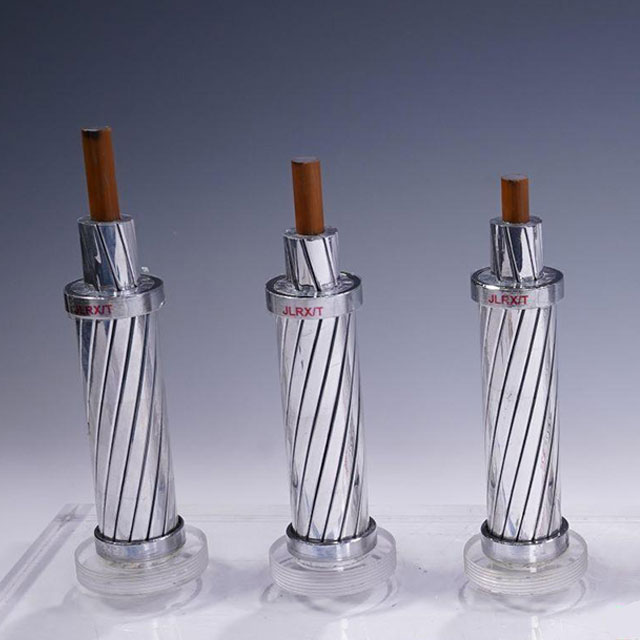
Utility planners face a critical and urgent challenge today. We must continually upgrade grid capacity to meet surging modern energy demands. Building entirely new transmission towers is often too expensive and painfully slow. Permitting delays and intense right-of-way battles complicate new infrastructure builds. To solve this bottleneck, the power industry is rapidly transitioning strategies. We are moving away from legacy Aluminum Conductor Steel Reinforced cables. Instead, engineers are adopting advanced High-Temperature Low-Sag (HTLS) options like Aluminum Conductor Composite Core. This shift brings complex new technical questions. How do you evaluate these modern options objectively? This guide provides a purely technical and economic framework. It helps utilities and engineers decide exactly when the premium for advanced conductors is justified. You will learn the specific performance differences, deployment risks, and lifecycle returns. We will give you the objective facts to make an informed grid modernization choice.
Key Takeaways
Capacity & Efficiency: ACCC can carry up to twice the current of identically sized ACSR with significantly lower line loss, making it ideal for capacity upgrades on existing structures.
Sag & Clearance: ACCC’s composite core virtually eliminates thermal sag, solving clearance issues that bottleneck legacy ACSR lines.
Implementation Risks: Upgrading to an ACCC Conductor requires specialized fittings, stricter handling protocols, and crew retraining compared to standard ACSR installation.
The Reconductoring Challenge: Why Upgrades Force a Choice
Grid modernization presents massive hurdles for utility planners. You rarely have the luxury of building entirely new lines across open terrain. Right-of-way (ROW) limitations heavily restrict expansion. Urban sprawl encroaches on existing corridors, making land acquisition nearly impossible. Furthermore, permitting delays can stretch greenfield projects into decades-long struggles. Environmental impact studies and public opposition stall progress constantly.
Aging transmission towers also impose strict structural limits. Engineers designed most existing structures decades ago for specific wind and ice loads. These physical constraints force you into a tight corner. You urgently need to deliver more power, but you cannot add more weight to the structures or build new ones.
The traditional ACSR Conductor serves as our baseline solution. It remains the long-standing industry standard. It is reliable, affordable, and universally understood by line crews globally. However, this legacy technology hits a hard thermal limit. Standard options typically max out around 90°C. Pushing more current generates excessive heat, causing the heavy steel core to expand and sag dangerously. The immense weight of the steel also maximizes the structural load on your towers.
To overcome these limits, manufacturers developed the ACCC Conductor. These HTLS solutions bypass physical limitations entirely. They swap the heavy steel core for a lighter, significantly stronger carbon and glass fiber composite core. Other similar advanced technologies, like the CFCC Cable, offer parallel benefits using varying stranded composite profiles. These modern options give you a lighter cable. They let you carry more conductive aluminum without increasing the overall mechanical load on your fragile towers.
Comparing these technologies requires looking closely at the raw physics. Operating temperatures drastically separate the two options. The composite core allows continuous operation at high temperatures without degrading. You can run an advanced composite line continuously at 180°C. In emergency scenarios, it can even peak near 200°C safely. This incredible thermal capacity allows it to carry roughly double the ampacity of an equivalent legacy steel-reinforced line. You push massive amounts of power through the exact same physical space.
The weight-to-strength ratio tells an even more compelling story. The composite core is significantly lighter than steel while retaining exceptional tensile strength. This weight savings allows manufacturers to change the shape of the outer conductive wires. They use a trapezoidal wire (TW) design. Because the wires are flat-sided, they interlock perfectly without interstitial air gaps. You pack roughly 28% more conductive aluminum into the same overall outer diameter. You increase the conductive material without increasing the tower load.
Sag resistance directly impacts grid safety and regulatory compliance. When analyzing the ACCC vs ACSR engineering debate, you must examine the coefficient of thermal expansion (CTE). Steel expands linearly when heated. Legacy lines sag dangerously under high electrical loads and intense summer temperatures. Conversely, composite cores possess a negligible CTE. They virtually eliminate thermal sag. They maintain strict ground clearance limits even when operating at maximum peak temperatures.
Line loss and efficiency provide a strongly evidence-oriented advantage. Electrical resistance causes power loss over long transmission distances. The advanced composite lines use fully annealed pure aluminum (Type 1350-O). Pure aluminum is more conductive than the hard-drawn aluminum required for steel-reinforced cables. Combining this pure aluminum with the trapezoidal wire design reduces overall line losses by 25-30%. You successfully deliver much more of the generated power directly to the end user.
Best Practices
Always calculate clearance buffers using peak emergency temperatures, not just continuous operating temperatures.
Verify local wind loading regulations when transitioning from round wire to trapezoidal wire designs.
Conductor Performance Metrics Summary
Performance Metric
Legacy Steel-Reinforced
Advanced Composite Core
Maximum Continuous Temp
90°C - 100°C
Up to 180°C
Core Material
Galvanized Steel
Carbon and Glass Fiber
Ampacity Rating
Baseline (1x)
Up to 2x Baseline
Electrical Line Loss
Standard Loss Rate
25% - 30% Reduction
Thermal Sag Profile
High Sag at Peak Load
Virtually Zero Thermal Sag
Economic Feasibility: Upfront CAPEX vs. Lifecycle ROI
Every utility project faces harsh budget realities. We must transparently acknowledge the immediate drawback. Advanced composite conductors are significantly more expensive per kilometer than traditional steel-reinforced options. The carbon fiber manufacturing process and aerospace-grade resins cost more than basic galvanized steel. If you only evaluate initial material procurement costs, the legacy materials will always appear cheaper.
However, the reconductoring math changes your perspective entirely. Upgrading capacity with standard heavy materials usually requires reinforcing or replacing aging towers. You must build stronger structures to handle higher loads. Infrastructure replacement is wildly expensive and incredibly slow. If you utilize existing towers by stringing lightweight composite cables, you avoid structural rebuilds entirely. The infrastructure avoidance savings almost always exceed the premium paid for the advanced conductor.
You also generate massive long-term return on investment (ROI) through generation and line loss savings. Reduced electrical resistance translates directly to lower energy waste over a 30-to-40-year lifespan. Utilities spend millions generating power that simply burns off as heat during transmission. By cutting those losses by up to 30%, the cable effectively pays for itself over the first decade of operation.
Maintenance and longevity assumptions further shift the economic balance. We must evaluate corrosion resistance. Galvanized steel eventually suffers from bimetallic corrosion after decades of environmental exposure. When moisture penetrates the outer strands, the aluminum and steel react chemically. Composite cores are entirely non-metallic and inert. They do not rust or corrode. This chemical stability potentially extends the operational lifecycle of your grid.
Common Mistakes
Engineers often make the mistake of comparing cables purely on a price-per-foot basis during initial procurement. Failing to factor in avoided tower replacement costs creates a heavily skewed, inaccurate budget model.
Implementation Realities, Drawbacks, and Deployment Risks
Advanced technologies always introduce new operational friction points. You cannot handle composite cores exactly like traditional steel. Handling fragility represents a primary core vulnerability. Steel is forgiving; you can bend it during installation. Composite cores cannot bend beyond their strictly specified radius limits. If crews mishandle the cable during stringing, they can cause catastrophic core fractures. An internal snap compromises the entire line.
Hardware and tooling requirements also change drastically. You must specify proprietary dead-ends, splices, and specialized installation hardware. Standard two-part compression fittings remain completely incompatible. If a crew attempts to force standard compression fittings onto a composite core, they will crush the internal carbon fibers. You must utilize specialized collet-type mechanical grips designed specifically for these modern cables.
Crew training and certification demand immediate attention. The learning curve for installation is surprisingly steep. Project execution requires certified technicians on site. Crews must precisely monitor specific pulling tensions. They must use distinctly larger bullwheels and modified braking equipment to respect the bending radius limits. This training requirement increases initial deployment friction and contractor costs. You cannot safely hand this advanced cable to an untrained crew.
Supply chain constraints represent another deployment reality. Legacy steel-reinforced cable is a highly commoditized product. You can source it easily from countless global manufacturers. Conversely, advanced core conductors require vetting highly specialized manufacturers. The production requires advanced pultrusion techniques. You might face longer lead times and a narrower pool of qualified vendor options. You must plan procurement cycles carefully to avoid scheduling delays.
Best Practices
Mandate specialized installation certification for all foremen and lineworkers prior to the project start date.
Audit all installation hardware to ensure strictly proprietary dead-ends and splices arrive on site.
Deploy advanced tension monitors during the pulling phase to prevent accidental core overstress.
Decision Framework: How to Choose the Right Conductor for Your Project
Engineers must carefully align grid technology with specific project constraints. There is no universal right answer. You must evaluate the terrain, the budget, and the structural realities before purchasing materials.
When to Stick with ACSR
Traditional steel-reinforced cables remain highly effective in specific scenarios. You should default to standard options when evaluating:
New greenfield transmission lines where you can easily build robust new towers optimally.
Projects burdened by severe budget constraints strictly focused on initial capital expenditure (CAPEX).
Remote regions where power demand and line loss economics do not justify the high premiums of advanced HTLS options.
Isolated areas lacking access to specialized maintenance crews or the budget to continually retrain them.
When to Upgrade to ACCC
Advanced composite cables become necessary when physical constraints override initial material costs. You should transition to advanced options when managing:
Complex reconductoring projects strictly limited by existing ROW and fragile, aging tower structures.
Lines crossing critical terrain such as wide rivers, major highways, or dense urban areas where clearance thermal sag creates a severe safety hazard.
High-load corridors where minimizing continuous transmission line losses translates directly into massive operational financial savings.
Conclusion
Legacy steel-reinforced options remain the undisputed, cost-effective workhorse for standard greenfield grid projects. They are reliable, accessible, and cheap to deploy across open terrain. However, the energy landscape is changing. Grid upgrades face heavy constraints from aging existing infrastructure and impossibly narrow right-of-ways. In these complex reconductoring scenarios, advanced composite cables change the math entirely. They evolve from being just an expensive premium cable into a crucial, tower-saving solution.
Procurement and engineering teams must take deliberate next steps. We strongly advise conducting a localized structural analysis immediately. You should also run a comprehensive line-loss lifecycle calculation based on your projected load profiles. You must understand your structural limits and potential energy savings first. Only after completing these localized engineering analyses should you request formal RFQs for specific advanced conductor profiles.
FAQ
Q: Can you install an ACCC conductor using standard ACSR equipment?
A: No. You must use specialized pulling gear, appropriately sized bullwheels, and strictly proprietary hardware fittings. Standard compression fittings will crush the fragile composite core. Bending the cable beyond its strict minimum radius limit will cause irreversible core fractures, compromising the entire transmission line.
Q: Is ACCC the only composite core option available?
A: While it remains highly dominant in the market, other reliable alternatives exist. Technologies like CFCC Cable (Carbon Fiber Composite Cable) offer similar High-Temperature Low-Sag benefits. They utilize slightly different core structures and stranding profiles to achieve increased ampacity and reduced thermal sag.
Q: How does the lifespan of ACCC compare to ACSR?
A: Advanced composite options offer a highly durable expected lifespan of 40+ years. Unlike standard steel cores, carbon and glass fiber composites do not suffer from bimetallic galvanic corrosion. This chemical stability prevents internal degradation, often outlasting legacy galvanized materials significantly in harsh, humid environments.
Q: Does ACCC actually reduce greenhouse gas emissions?
A: Yes, it provides a very strong indirect environmental benefit. Because the trapezoidal aluminum design significantly lowers electrical line loss, less overall power generation is required at the source to meet demand. Reducing generation demand directly lowers the overall carbon footprint of your electrical grid operations.