In industrial and outdoor power deployment, treating "waterproof" and "water-resistant" as interchangeable marketing terms is a costly engineering mistake. Relying on vague product descriptions often leads to catastrophic project outcomes. System failures, short circuits, and corrosion often stem from a mismatch between a cable’s environmental rating and the actual application site. Moisture inevitably finds vulnerabilities if you fail to match the wire to the specific exposure level.
This guide breaks down the structural differences, IP ratings, and risk-evaluation frameworks needed to specify the correct cable for moisture-prone environments. You will learn how to navigate the complex landscape of waterproof vs water resistant cable specifications. We will help you ensure absolute reliability in your next installation.
Key Takeaways
Water-resistant cables repel moisture from temporary exposure (splashes, light rain) but will fail under submersion.
Waterproof cables withstand sustained immersion, relying on specialized jacketing and internal water-blocking elements.
Watertight/Water-blocking integrity is required for critical applications to prevent longitudinal water tracking if the outer jacket is breached.
Selection must be driven by objective IP ratings and compounding environmental factors (UV, soil chemicals, physical abrasion), not just baseline moisture protection.
Defining the Terms: Engineering Reality Over Marketing Hype
Engineers and buyers frequently encounter confusing marketing language when sourcing components for wet environments. Manufacturers love applying broad labels to their products. However, you must understand the strict engineering definitions behind these terms to avoid system failures.
The "Water-Resistant" Baseline
Water-resistant products serve as the industry baseline for outdoor exposure. Engineers design them to shed water rapidly. They survive intermittent exposure perfectly well. Typical use cases include above-ground outdoor routing where gravity provides proper drainage.
We must note a significant risk warning here. Capillary action can draw moisture deep into the core if you leave these wires sitting in standing water. Water-resistant jackets do not offer an absolute barrier against prolonged hydrostatic pressure.
The "Waterproof" Standard
Moving up the tier brings us to the waterproof standard. Manufacturers engineer a true Waterproof Cable for continuous submersion or high-pressure washdowns. These products rely heavily on non-hygroscopic materials. Non-hygroscopic materials physically cannot absorb moisture from the surrounding environment. They form a solid radial barrier against liquid ingress under specific depths and durations.
The Advanced Tier: Watertight & Water-Blocking
Even a highly rated waterproof jacket can suffer mechanical damage. An excavator might scrape it. A rodent might chew it. This reality introduces the advanced tier: watertight and water-blocking constructions. This category addresses the internal vulnerabilities of standard designs.
It defines the crucial difference between radial protection and longitudinal protection. Radial protection stops water from piercing the outer jacket. Longitudinal protection prevents water from traveling along the inside of the core once the outer jacket sustains damage.
Structural Design: How Cables Actively Defeat Moisture
A reliable moisture barrier requires more than just a thicker plastic coating. Advanced structural designs incorporate multiple layers of defense. These layers work together to actively repel, block, and isolate liquid threats.
Outer Jacketing Materials
The first line of defense is always the outer jacket. Standard PVC (Polyvinyl Chloride) resists water quite well for basic applications. However, PVC becomes brittle in freezing temperatures and can degrade under prolonged submersion. Specialized waterproof applications demand superior polymers.
Outer Jacketing Material Comparison
Material
Moisture Resistance Level
Primary Use Case
Standard PVC
Water-Resistant
Light outdoor use, temporary exposure
Polyurethane (PUR)
Highly Waterproof
Harsh environments, high abrasion risk
Ethylene Propylene Rubber (EPR)
Watertight
Submersion, extreme temperature flexibility
Chlorinated Polyethylene (CPE)
Waterproof
Industrial plants, chemical exposure
Internal Water-Blocking Technologies
If the outer jacket fails, internal technologies must take over immediately. Modern engineering utilizes highly reactive materials to stop liquid movement.
Swellable Tape and Yarns: Manufacturers wrap the inner conductors in specialized swellable materials. These components look like standard fabric strips. When moisture touches them, they absorb the liquid instantly. They expand up to three times their original size. This expansion seals all internal voids immediately upon a jacket breach.
Gel-Filled Compounds: Engineers use gel-filled compounds in heavy-duty applications. Extruders pump dense, water-repellent gel between the conductors during manufacturing. This eliminates all air gaps. Water physically cannot pool inside a space already occupied by a dense gel.
Connector and Termination Vulnerabilities
You can buy the best moisture-blocking wire in the world. It will still fail if you install it poorly. A waterproof setup is only as reliable as its glands and connectors. Water frequently bypasses the jacket entirely by entering through a poorly sealed junction box. You must pair high-grade wiring with equally rated IP connectors to maintain environmental integrity.
Demystifying IP Ratings for Cable Selection
You cannot rely on text descriptions alone when selecting parts for wet environments. The Ingress Protection (IP) rating system provides an objective, standardized metric for evaluating moisture defense.
Understanding the "X" in IPX
An IP rating typically consists of two numbers, such as IP67. The first digit represents protection against solid objects like dust. The second digit focuses specifically on liquid ingress. When evaluating moisture protection, you should focus heavily on this second number.
IP65/IP66 (Water-Resistant Territory)
Ratings of IP65 and IP66 fall firmly into the water-resistant category.
IP65: Protects against low-pressure water jets from any direction.
IP66: Protects against high-pressure water jets and heavy seas.
These ratings work perfectly for factory washdown areas or exposed rooftop wiring. However, they do not certify the product for submersion.
IP67/IP68 (Waterproof Territory)
Ratings of IP67 and IP68 indicate true waterproof capabilities.
IP67: Withstands temporary submersion in water up to 1 meter deep for 30 minutes.
IP68: Withstands continuous submersion under specific conditions.
We must highlight a crucial caveat regarding IP68. It is not a universal standard. Manufacturers must specify the exact depth and time duration for their IP68 products. One brand might certify "2 meters for 24 hours," while another might certify "50 meters for 10 years."
Advise your procurement teams to demand independent testing certificates. Never accept an "IP68" marketing badge at face value without verifying the underlying test parameters.
Evaluating Cables for High-Stakes Applications
Different industries face entirely different moisture challenges. You must evaluate the exact environmental threats before finalizing a specification sheet. High-stakes applications leave no room for guesswork.
Scenario 1: Continuous Deep Submersion
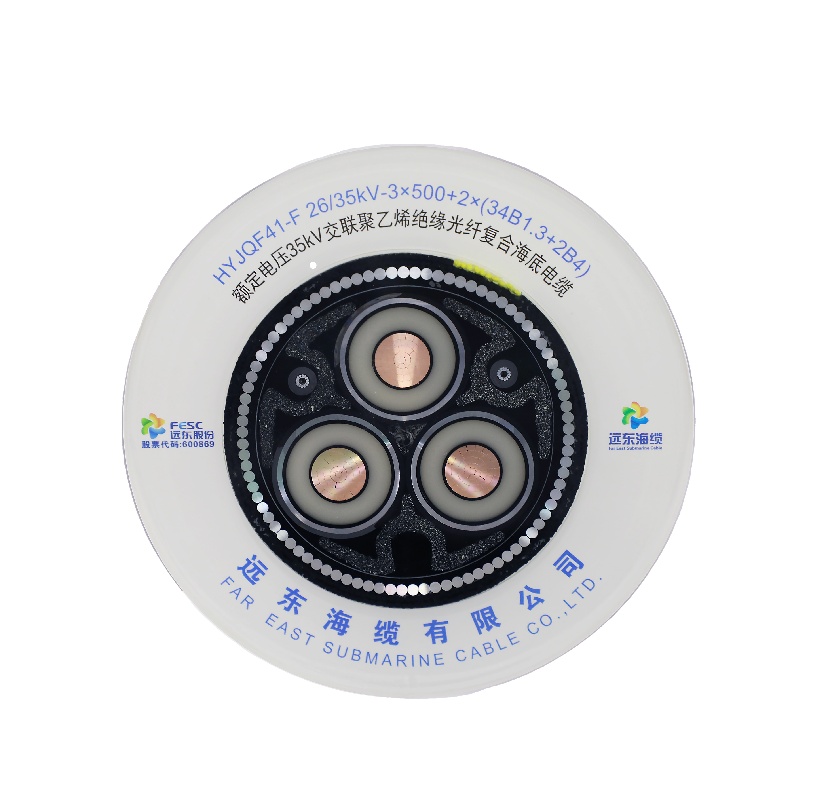
Consider an offshore wind farm or an underwater grid connection. This scenario requires a heavy-duty MV Submarine Cable. Continuous deep submersion demands heavy steel armor to prevent anchor strikes. It requires multi-layer polymer extrusion. It absolutely demands watertight longitudinal integrity.
The cost of failure in these environments is astronomical. You cannot easily send a repair crew to the ocean floor. This high failure risk dictates over-engineering the moisture barrier at every possible level.
Scenario 2: Intermittent but Severe Weather
Consider public electric vehicle charging infrastructure. This scenario requires an Outdoor Waterproof EV Cable. These cords face a unique set of challenges. They sit in deep puddles during thunderstorms. They bake under intense ultraviolet light in summer. They drag across rough concrete daily.
Engineers must specify a product that balances waterproofing, UV resistance, and extreme flexibility in freezing temperatures. The jacket must withstand puddle submersion while simultaneously resisting physical wear and tear.
Compounding Environmental Threats
Water rarely acts alone in the real world. You must account for compounding environmental threats.
Direct burial risks: Placing wires underground exposes them to shifting ground moisture. It also introduces soil acidity, alkaline chemicals, and intense mechanical pressure from rocks.
Temperature fluctuations: Drastic changes in temperature cause significant condensation inside protective conduits. Even if external water never breaches the conduit, internal condensation can accumulate and submerge the wiring from the inside out.
Decision Framework: Which Cable Does Your Project Actually Need?
Choosing the right product requires a structured decision-making process. You can avoid both under-performing systems and unnecessarily expensive installations by following a logical framework.
Assess the True Exposure
First, analyze the physical nature of the moisture. Is the water static, like a pooling puddle in a basement? Is it dynamic, like high-pressure cleaning jets in a food processing plant? Is it vapor, like extreme humidity in a tropical server farm? Dynamic water requires tougher outer jackets, while static submersion requires superior internal blocking.
Determine the Consequence of Failure
Next, evaluate what happens if the moisture barrier fails.
If failure means a simple component replacement on a garden lighting rig, a water-resistant rating may suffice perfectly.
If failure causes massive facility downtime, initiates safety hazards, or stops critical infrastructure, you must invest in true waterproof and water-blocking designs.
Cable Selection Decision Matrix
Environmental Exposure
Required Protection Level
Recommended IP Rating
Internal Blocking Needed?
Occasional splashes, fast drainage
Water-Resistant
IP65 / IP66
No
Heavy rain, standing puddles
Waterproof
IP67
Optional, depending on risk
Direct burial, conduits with condensation
Watertight
IP68
Yes (Swellable tapes)
Ocean floor, deep underwater routing
Submarine Grade
IP68 (Depth certified)
Yes (Gel-filled + Tapes)
Cost vs. Capability
Aim for the optimal balance between cost and capability. Avoid over-specifying components. You do not need to pay for submarine-grade engineering for a simple outdoor residential setup. Conversely, you must strictly adhere to compliance standards for critical infrastructure. Cutting corners on underground installations usually results in catastrophic shorts down the line.
Next Step
Before finalizing the bill of materials, consult detailed engineering spec sheets. Verify the exact immersion depths. Check the UV ratings. Confirm the operating temperature ranges. Only proceed when the data matches your site's reality.
Conclusion
Treating environmental ratings lightly leads to dangerous electrical failures. The distinction between "water-resistant" and "waterproof" remains a strict engineering boundary, not a semantic debate. Water-resistant products manage surface moisture efficiently, but they succumb to submersion. True waterproofing requires a deliberate combination of appropriate jacketing materials, internal water-blocking gels or tapes, and validated IP testing protocols.
Protect your next installation by taking environmental threats seriously. Review your project's unique moisture, chemical, and mechanical demands thoroughly. Contact a specialized technical sales representative or an electrical engineer today to audit your cable selection and ensure long-term operational safety.
FAQ
Q: Can I bury water-resistant cable underground?
A: No. Condensation, shifting ground moisture, and soil pressure easily overwhelm basic jackets. These harsh conditions require specifically rated direct-burial waterproof cables equipped with thicker protective layers and internal blocking mechanisms.
Q: Does a higher IP rating mean the cable is better for outdoor use?
A: Not necessarily. IP ratings only measure physical ingress protection against solids and liquids. An IP68 cable might handle deep water perfectly but completely lack UV resistance, causing it to crack and degrade quickly in direct sunlight.
Q: What happens if water gets inside a water-resistant cable?
A: Water travels along the inner conductors via a process called capillary action. This unintended liquid movement leads to rapid metal oxidation, severe impedance changes, and eventual system shorting or complete failure.
Q: Are all EV charging cables waterproof?
A: High-quality outdoor variants are typically rated IP67 or IP68 to handle harsh weather. However, standard indoor-rated EV cables are merely water-resistant. You should never leave indoor-rated cords resting in standing puddles or snowbanks.