Tel: +86-138-1912-9030 E-mail: Erpoow@ergreenbuild.com

Views: 0 Author: Site Editor Publish Time: 2026-08-22 Origin: Site


Industrial environments push standard equipment to its absolute breaking point daily. Standard cables degrade rapidly when exposed to industrial oils, synthetic lubricants, and aggressive coolants. This constant chemical assault leads to jacket swelling, severe cracking, and ultimately catastrophic electrical failures. Procurement decisions become highly complex under these harsh manufacturing conditions. The simple label "oil resistant" is not a universal standard. Selecting the right wire requires aligning specific jacket materials with exact chemical exposures and dynamic mechanical stresses. You must ensure absolute reliability to maintain operations safely and efficiently. This guide provides a comprehensive technical evaluation framework for specifying the correct Oil Resistant Cable. We carefully balance material science, UL compliance standards, and demanding application-specific needs. You will learn exactly how to evaluate insulation materials to minimize unplanned facility downtime.
Standard cable jackets absorb oil, causing structural degradation and electrical hazards; specialized insulation is a baseline requirement for manufacturing, oil/gas, and heavy automation environments.
Jacket materials (PVC, PUR, TPE) dictate both chemical resistance and mechanical durability.
Compliance standards (like UL Oil Res I and II) provide objective baselines for temperature and exposure duration testing.
Mechanical application matters: static wiring requires different specialty cable specifications than dynamic applications like an oil-resistant crane cable.
Standard jackets cannot withstand harsh industrial fluids. Petroleum-based fluids and synthetic coolants act as highly aggressive chemical agents. They extract the original plasticizers from standard polymer jackets. This specific chemical mechanism breaks down the structural integrity of your insulation completely. The fluid literally pulls critical flexibility out of the material matrix. You lose the very properties keeping the wire safe.
Visible symptoms of failure follow a highly predictable progression. Initially, maintenance teams will notice jacket swelling and localized softening. The material becomes sponge-like as it absorbs surrounding machine fluids. It loses its physical defense capabilities rapidly. Soon, the jacket transitions into severe, irreversible hardening. It loses elasticity entirely. Finally, daily mechanical movement causes deep structural cracking. This dangerous phase exposes the internal live copper core to the external environment.
The business impact is incredibly severe. Minor insulation failure rapidly escalates into major electrical faults. Bare wires cause instant short circuits across production lines. These electrical faults trigger immediate machine downtime. Operations grind to a sudden halt. Furthermore, exposed conductors create significant fire risks and severe safety hazards for operators. Upgrading to the correct Specialty Cable mitigates these risks completely. A proactive material investment prevents catastrophic operational stops and ensures continuous facility safety.
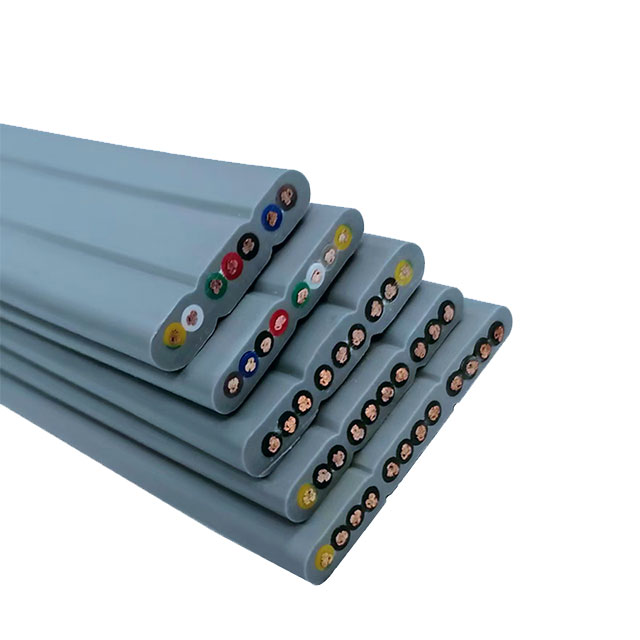
Jacket materials define performance limits in harsh manufacturing environments. You must match the polymer compound precisely to your specific operational hazards. Different chemicals interact uniquely across various plastic formulations.
PVC remains widely used for light to moderate fluid exposure. It suits general manufacturing facilities exceptionally well. PVC offers a highly cost-effective solution for basic, static environments. Many legacy systems rely heavily on standard PVC formulations. However, buyers face distinct technical caveats. PVC lacks sufficient resilience against aggressive synthetic cutting fluids used today. Continuous chemical exposure makes PVC rigid and extremely brittle over time. Once brittleness sets in, physical cracking quickly follows.
PUR excels dramatically in severe environments. It handles heavy mechanical wear and direct, constant contact with cutting oils. PUR commands a premium cost upfront during the procurement phase. However, it offers superior tear resistance alongside exceptionally high oil resistance. You should specify PUR when severe abrasion and harsh chemicals threaten your transmission lines simultaneously. It resists snags, cuts, and deep gouges on the factory floor.
TPE delivers extreme, unparalleled flexibility. It handles continuous oil exposure while surviving millions of repeated flex cycles. Engineers specify TPE almost exclusively for highly dynamic robotic applications. Moving cable tracks require this exact blend of chemical and physical endurance. Caveats exist regarding precise material formulations. You must verify specific compounding methods. Performance varies significantly by individual manufacturer.
Generic material claims often mislead buyers during the specification process. Never trust a simple labeling claim blindly. Advise your procurement team to request detailed chemical compatibility charts. Manufacturers must provide verifiable testing data. This documentation proves their specific compound handles your exact fluids safely. You need objective proof, not just marketing promises.
Insulation Material Comparison Chart
Material | Best Application | Key Strengths | Primary Limitations |
|---|---|---|---|
PVC | Light general manufacturing | Cost-effective, good baseline protection | Fails against synthetic coolants, becomes rigid |
PUR | Severe mechanical environments | Exceptional tear resistance, strong fluid defense | Higher premium cost |
TPE | Continuous flexing scenarios | Extreme flexibility, reliable chemical defense | Performance heavily dependent on vendor blend |
Marketing terminology creates immense confusion during system specification. The loose phrase "oil resistant" is just a dangerous marketing term. Verifiable testing standards are absolutely required for modern industrial compliance. You need objective testing baselines to ensure true reliability. Recognized laboratories provide the necessary testing frameworks.
UL Oil Res I defines moderate chemical resistance levels. The strict testing matrix involves 96 continuous hours of fluid exposure. Testers submerge the material completely at a sustained 100°C. This implication is quite clear for engineers. UL Oil Res I suits environments experiencing intermittent, accidental exposure. It works well in moderate ambient temperatures. Occasional splashing will not degrade these approved jackets. They easily survive routine wipe-downs and minor facility spills.
UL Oil Res II demands far more rigorous performance metrics. The intense testing matrix requires 60 days of uninterrupted exposure. The jacket material sits submerged entirely at 75°C. This standard handles extreme chemical saturation efficiently. You require this specific rating for continuous immersion scenarios. Areas experiencing deep pooling fluids absolutely mandate UL Oil Res II compliance. Failing to specify this rating invites guaranteed insulation breakdown.
Global operations often require strict international testing compliance. You should cross-reference European standard tests carefully. EN 50363 provides strict criteria for OEM compliance globally. European guidelines often utilize different fluid compositions for their immersion tests. Matching UL ratings with VDE/EN equivalents ensures universal safety approvals. This dual-compliance strategy guarantees your machinery ships legally across international borders.
Different industries apply unique stresses to critical electrical systems. You must align physical features to specific environmental outcomes. A universal solution simply does not exist for every hazard.
Refineries combine multiple extreme hazards simultaneously. Focus heavily on aggressive, continuous chemical exposure. Combine this threat with extreme ambient temperature fluctuations. You also need strict hazardous location (HazLoc) safety ratings. These environments demand the most resilient jacketing compounds available today. Spark prevention remains the highest priority in these highly volatile zones.
Modern machining introduces complex synthetic coolants to the workspace. These aggressive fluids destroy standard PVC jacketing incredibly quickly. Focus your specification on robust synthetic chemical resistance. CNC machines also route wiring through very tight, dynamic cable tracks. Continuous flexing requires premium PUR or TPE jackets to prevent structural fatigue. Static wires fail rapidly inside moving machinery tracks.
Overhead cranes and hoists present a difficult dual-threat requirement. Complex lifting systems demand high tensile strength and extreme torsion resistance. They also face constant environmental fluid exposure. Specifying a dedicated Oil-Resistant Crane Cable solves both physical issues effectively. You must actively evaluate the necessity of reinforced jacketing here. Festoon systems and reeling applications face frequent oil slicking. This dangerous slicking causes mechanical slippage or severe chemical breakdown. Purpose-built crane jackets prevent these specific mechanical failures entirely.
Even premium wire products fail quickly under poor installation practices. You must address vital implementation realities to guarantee adoption success. Proper handling ensures maximum product lifespan.
Your electrical system relies on every single component holding up perfectly. An expertly specified oil resistant cable only works effectively if installed properly. Connectors, glands, and physical seals form the actual defense perimeter. If fluids breach a cheap connector, the premium jacket cannot save the system. Fluids will wick internally along the copper strands. Always specify chemically rated termination hardware to match your wire.
Installation geometry impacts longevity directly and measurably. Fluid saturation can alter polymer flexibility slightly over time. Extreme facility cold also stiffens the jacket significantly. You must adhere strictly to manufacturer bend radius limits. Tight physical bends induce severe stress on the polymer structure. This stress leads to microscopic surface micro-cracking. Fluids easily penetrate these hidden cracks over time. Follow the minimum bend radius data sheet completely.
Every specialty line has a maximum operational lifespan. You need proactive maintenance frameworks immediately. Implement a strict, scheduled visual inspection routine across your entire facility.
Inspect critical connection points and glands monthly.
Check the entire run for early jacket discoloration.
Feel the outer jacket for unexpected softening or abnormal swelling.
Verify all connector seals remain tight, secure, and fully dry.
Monitor flex points for initial signs of surface abrasion.
Early detection allows for fully planned replacements. You fix the issue before catastrophic power failures occur.
Specifying the exact right jacket requires intense environmental alignment. You must match the specific jacket material and UL rating directly to your facility realities. Chemical exposure levels and dynamic mechanical movement dictate your ultimate choice. Procurement teams should always demand comprehensive chemical resistance data sheets upfront. Verify all UL ratings directly through official manufacturer documentation. Prioritize specialty vendors offering robust engineering support for highly dynamic applications. Do not simply ignore your current aging infrastructure. Encourage your maintenance teams to audit high-failure wiring runs immediately. Identify those physical spots experiencing recurrent insulation breakdown. Contact a technical sales representative quickly to secure a highly targeted recommendation. Proactive replacement saves immense capital over time.
A: No cable is indefinitely "oil proof." Over extreme timeframes, all polymers eventually degrade. Oil resistance indicates the rate of degradation is significantly slowed. These rated jackets meet specific operational lifespans under standard testing. They ensure reliable performance for years rather than months. You buy guaranteed operational time, not permanent invulnerability.
A: Standard THHN fails quickly when exposed to harsh fluids. Oil easily ingresses into conduit systems over time. Gravity causes these fluids to pool at low points. If oil reaches standard THHN inside the pipe, insulation failure will still occur. Always pull appropriately rated wiring even within enclosed raceways.
A: PUR handles synthetic and mineral oils exceptionally well. It offers premier defense against harsh fluids. However, buyers must still cross-reference the exact chemical composition of their cutting fluid or lubricant. Certain aggressive chemical additives can occasionally bypass standard resistances. Always verify compatibility charts for your specific brand of coolant.


