| Availability: | |
|---|---|
| Quantity: | |
Excellent temperature resistance
Control cables are engineered using advanced high-temperature and cold-resistant insulation materials, ensuring reliable operation across a demanding temperature range from -40°C to +90°C. This thermal stability means the physical and electrical properties of the cables remain intact even under extreme environmental conditions. For procurement professionals and project engineers, this wide temperature tolerance significantly reduces the risk of cable failure, such as cracking in freezing conditions or thermal degradation in high-heat industrial settings. By maintaining structural integrity and consistent signal transmission, these cables provide long-term reliability for strict industrial applications, minimizing maintenance costs and preventing unexpected downtime.
Anti-interference design
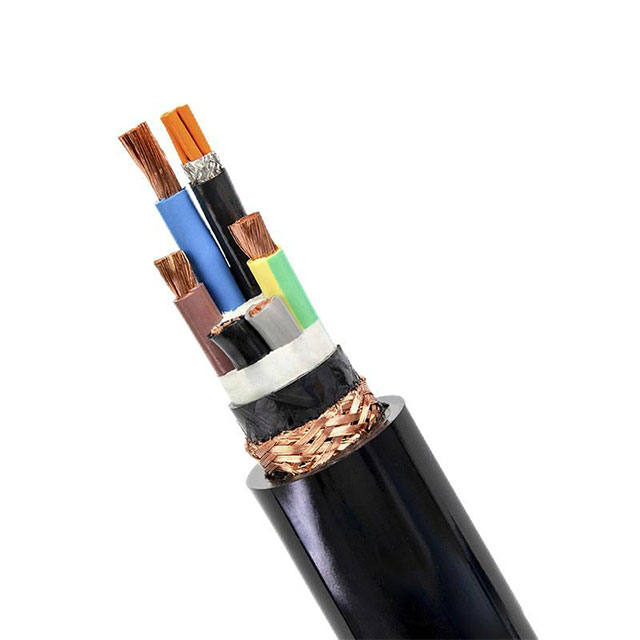
To guarantee signal integrity, these control cables feature a highly effective anti-interference design equipped with either copper wire winding or an aluminum foil shielding layer. In complex industrial environments where electromagnetic interference (EMI) and radio frequency interference (RFI) are prevalent, this shielding acts as a critical barrier. It effectively blocks external noise from disrupting the internal signals while also preventing the cable's own electrical noise from affecting nearby sensitive equipment. This characteristic is essential for modern automated systems, measurement instruments, and control panels that rely on precise, uninterrupted data and signal transmission. Choosing properly shielded cables ensures operational stability and protects valuable equipment from signal-induced errors.
Abrasion and corrosion resistance
The outer sheath of the control cable is constructed from high-strength materials specifically formulated for outstanding abrasion and corrosion resistance. Industrial environments often expose wiring to severe mechanical wear, friction, oil spills, and aggressive chemical agents. This durable outer jacket provides a tough protective layer that withstands physical impact and resists degradation from chemical exposure. For buyers focused on long-term value, this rugged construction translates to an extended operational lifespan and a lower total cost of ownership. It ensures that the internal conductors remain fully protected over years of continuous use, even in demanding settings characterized by heavy machinery, oil pollution, or chemical processing.
Flexibility and easy installation
Designed with a highly flexible structure, these control cables significantly simplify the laying and wiring process during project execution. The optimized core arrangement and pliable outer sheath allow for a tight bending radius without compromising the internal conductors or shielding. This flexibility is a major advantage when navigating complex conduit systems, tight corners, or confined spaces within machinery and control cabinets. For electrical contractors and installation teams, this easy-to-handle design reduces physical strain, accelerates installation time, and lowers overall labor costs. It ensures a smooth, efficient setup process while minimizing the risk of accidental damage to the cable during routing.
High safety
Safety is a paramount consideration in any cable installation, which is why these control cables utilize Low Smoke Zero Halogen (LSZH) materials. In the unfortunate event of a fire, standard cables can release dense, toxic black smoke and corrosive gases. In contrast, our LSZH control cables are engineered to drastically reduce smoke emission and eliminate toxic halogen gases when exposed to high heat or flames. This critical safety feature ensures better visibility for safe evacuation and prevents corrosive damage to surrounding sensitive electronic equipment. By meeting stringent environmental and safety protection requirements, these cables help mitigate fire-related risks and provide peace of mind for facility managers and safety inspectors.
The reliable operation of modern infrastructure and industrial facilities depends heavily on accurate signal transmission. Our versatile range of control cables, including flat flexible control cables, multi-core configurations, LSZH, shielded, and steel armored control cables, are engineered to deliver consistent performance across demanding application environments. By ensuring continuous communication between critical components, these cables help project managers and procurement specialists mitigate operational risks and maintain system stability.
In the rapidly evolving landscape of factory automation, reliable signal transmission is the backbone of production efficiency. Multi-core control cables and flat flexible control cables are extensively utilized to connect sophisticated control systems, precision sensors, and heavy-duty actuators. In manufacturing plants, robotics, and assembly lines, these cables facilitate real-time data exchange and operational commands. Shielded control cables are particularly valuable in these settings, as they prevent electromagnetic interference (EMI) generated by heavy machinery from disrupting delicate control signals. By maintaining continuous and accurate communication between systems, these cables help reduce unexpected downtime, optimize production workflows, and support the long-term reliability of automated industrial equipment.
Power generation facilities and substations operate under complex electrical environments where signal integrity cannot be compromised. Control cables are essential components within the control loops, relay panels, and monitoring lines of these power systems. In power plants and distribution substations, they provide the critical electrical signal transmission required to achieve remote operation, real-time grid monitoring, and automated fault response. For installations exposed to potential mechanical impact or harsh environmental factors, steel armored control cables offer strong physical protection while maintaining uninterrupted signal flow. This ensures that power grid operators can safely and remotely manage critical infrastructure, thereby enhancing overall grid stability and operational safety.
Modern commercial buildings and large-scale public infrastructure projects rely on complex networks of electrical equipment to ensure occupant safety and operational efficiency. Control cables play a vital role in integrating building automation systems (BAS), including HVAC controls, lighting networks, and access management. Furthermore, in critical security and fire alarm systems, the dependability of the control cable directly impacts emergency response capabilities. LSZH control cables (Low Smoke Zero Halogen) are frequently specified for these indoor applications to meet strict fire safety regulations, ensuring that in the event of an emergency, smoke emission is minimized. Proper cable selection in these projects guarantees the normal operation of various electrical devices and reduces long-term maintenance overhead.
Offshore platforms, commercial vessels, and port facilities present some of the most challenging conditions for electrical installations. Specialized models of control cables are specifically designed to withstand the rigors of marine environments. They are engineered to be highly resistant to salt spray corrosion, constant moisture ingress, and the continuous vibration typical of maritime operations. These cables are crucial for ship automation control systems, navigation equipment, and offshore drilling machinery. By utilizing cables built to endure these harsh elements, marine engineers and procurement teams can prevent premature equipment failure, ensure reliable signal transmission across the vessel or platform, and significantly reduce the frequency of costly offshore maintenance.
The safety and efficiency of public transportation networks rely on absolute precision in signal transmission. Control cables are widely applied in subways, mainline railways, and urban transit systems to support signaling networks, trackside equipment, and station control automation. In these environments, cables must transmit control signals over long distances without degradation, often in the presence of high-voltage traction power lines. Shielded and heavily insulated control cables effectively support the stability and reliability of these vital communication links. By preventing signal interference and ensuring rapid response times for track switches and signaling lights, these cables contribute directly to the safe routing of trains and the smooth operation of complex transportation hubs.
Our comprehensive range of control cables—including flat flexible, multi-core, LSZH, shielded, and steel armored variants—is manufactured to meet stringent global standards. These certifications provide robust assurance of product quality, operational safety, and environmental compliance, helping procurement teams mitigate selection risks and ensure reliable performance across diverse industrial and commercial projects.
International General Certifications (ROHS, UL, CUL, CSA, etc.)
ISO: Includes ISO 9001 for quality management systems and ISO 14001 for environmental management, ensuring consistent manufacturing excellence and reliable supply capabilities.
IEC (International Electrotechnical Commission): Complies with globally recognized standards, such as IEC 60227 for PVC insulated cables, IEC 60502 for power cables, and IEC 60332 for flame propagation testing.
UL & cUL (Underwriters Laboratories): Provides recognized safety certification for electrical equipment and cables in the United States and Canada, verifying reliable performance in demanding environments.
CSA (Canadian Standards Association): Meets the stringent safety and performance standards required for electrical cable installations across Canada.
CE (Conformité Européenne): Ensures compliance with essential health, safety, and environmental protection requirements, making the cables suitable for deployment within the European Economic Area.
RoHS (Restriction of Hazardous Substances): Guarantees that our cable products are free from specific hazardous materials, supporting environmentally responsible project requirements.
NEC (National Electrical Code): Ensures that the cables meet the benchmark for safe electrical design and installation, protecting both personnel and property.
NEMA (National Electrical Manufacturers Association): Adheres to established industry standards for the safe and effective design of electrical cabling and equipment.
ASTM (American Society for Testing and Materials): Complies with rigorous testing and material specifications to guarantee long-term cable durability and safety.
Performance Certifications
BS (British Standards): Meets essential UK standards, including BS 5467 for power cables and BS 6004 for cable insulation materials, ensuring suitability for regional infrastructure projects.
AS (Australian Standards): Complies with strict regional requirements such as AS/NZS 3000, widely known as the Wiring Rules for secure electrical installations.
SAA (Standards Australia Approval): Certification that verifies the control cables meet the mandatory electrical safety requirements for the Australian market.
Special Application Certifications
LSZH (Low Smoke Zero Halogen): Certified to produce minimal smoke and no toxic halogens when exposed to fire. This is highly critical for public buildings, transit systems, and enclosed spaces where personnel safety and fast evacuation are priorities.
NFPA (National Fire Protection Association): Complies with comprehensive fire protection and safety standards to minimize the risk and potential effects of fire in electrical installations.
Environmental and Safety Certifications
REACH (Registration, Evaluation, Authorisation and Restriction of Chemicals): Ensures a high level of protection for human health and the environment by strictly managing the chemical substances used in cable manufacturing.
IEC 60332 (Cable Flame Propagation Test): Thoroughly evaluates the resistance of cables to flame propagation, confirming their structural reliability and safety in fire situations.
Cable Fire Protection Certification: Fully compliant with EN 50575 and CPR (Construction Products Regulation) to meet mandatory building safety codes.
1. EN 50575
This critical European standard applies to power, control, and communication cables intended for fixed installations in buildings and civil engineering works. It specifies the strict requirements for how these cables react to fire conditions, rigorously testing their combustion performance, heat release, and smoke emission. Compliance with EN 50575 ensures that the cables contribute minimally to the spread of fire, thereby enhancing overall structural safety and reducing project compliance risks.
2. CPR (Construction Products Regulation)
The Construction Products Regulation is a mandatory EU framework ensuring that building products meet stringent safety, health, and environmental protection requirements before they are placed on the market. Under CPR, cables are tested and classified according to their reaction to fire into distinct categories such as A1, A2, B, C, D, E, and F (often detailed as specific Euroclasses like B2ca, Cca, etc.). The higher the classification (e.g., A1 or B), the better the fire performance and the lower the hazard during emergency situations. This detailed classification system helps procurement teams, contractors, and engineers accurately select the appropriate cable safety level based on specific project requirements and local building codes.
When standard cable configurations cannot meet the rigorous demands of specialized industrial environments, our advanced customization services solve specific project challenges. We understand that every engineering project has unique operational requirements, spatial constraints, and environmental stressors. As a dedicated manufacturer, we provide tailor-made solutions for unique needs. By collaborating closely with procurement teams and project engineers, we develop custom cable designs that ensure reliable electrical performance, mechanical protection, and long-term stability, ultimately reducing installation risks and minimizing future maintenance requirements.
Mechanical protection is a critical factor in demanding industrial settings. To address severe physical hazards, we provide armored specialty cables (corrugated armor) and other tailored mechanical designs. Unlike standard armoring, corrugated armor offers an optimal balance between enhanced crush resistance and necessary flexibility. This specific customization is highly valuable for installations requiring tight bending radii without compromising the structural integrity of the inner core. Whether facing heavy impact risks, rodent threats, or continuous vibration, our custom corrugated armor solutions ensure stable signal and power transmission in challenging site conditions.
Thermal stability is essential for maintaining operational safety and efficiency. To accommodate extreme climates and high-heat industrial processes, we engineer customized cables with high temperature and low temperature resistance capabilities. By selecting precise insulation and jacketing materials, we tailor the thermal rating of our cables to match your specific environmental profile. For high-temperature applications, our custom formulations prevent material degradation or melting. Conversely, for freezing environments, our low-temperature resistant designs maintain crucial flexibility, preventing the jacketing from cracking or becoming brittle during installation and operation. This precise thermal adaptation ensures continuous performance regardless of environmental extremes.
Space limitations and specific termination requirements often dictate the need for non-standard internal designs. To solve these complex structural challenges, we can also customize aluminum/copper cable extensions with special-shaped conductor shapes. Utilizing special-shaped conductors allows for a more compact cable diameter, optimizing space utilization within tight conduits or crowded cable trays. Furthermore, this customization capability enables procurement managers to balance conductivity requirements, overall cable weight, and material costs by choosing between highly engineered copper or aluminum configurations. By adapting the physical geometry of the conductors, we help optimize the installation process and improve the overall efficiency of your electrical infrastructure.
Our core advantage lies in our manufacturing flexibility and deep technical expertise. By offering these tailor-made solutions, we empower our clients to overcome complex engineering hurdles that off-the-shelf products cannot resolve. From initial design consultation and prototype development to full-scale production, our customization capabilities are structured to deliver precise, reliable, and highly efficient cable solutions. Choosing our customized manufacturing services means investing in specialized engineering that directly aligns with your project specifications, ensuring secure, long-lasting, and highly adaptable cable deployments.